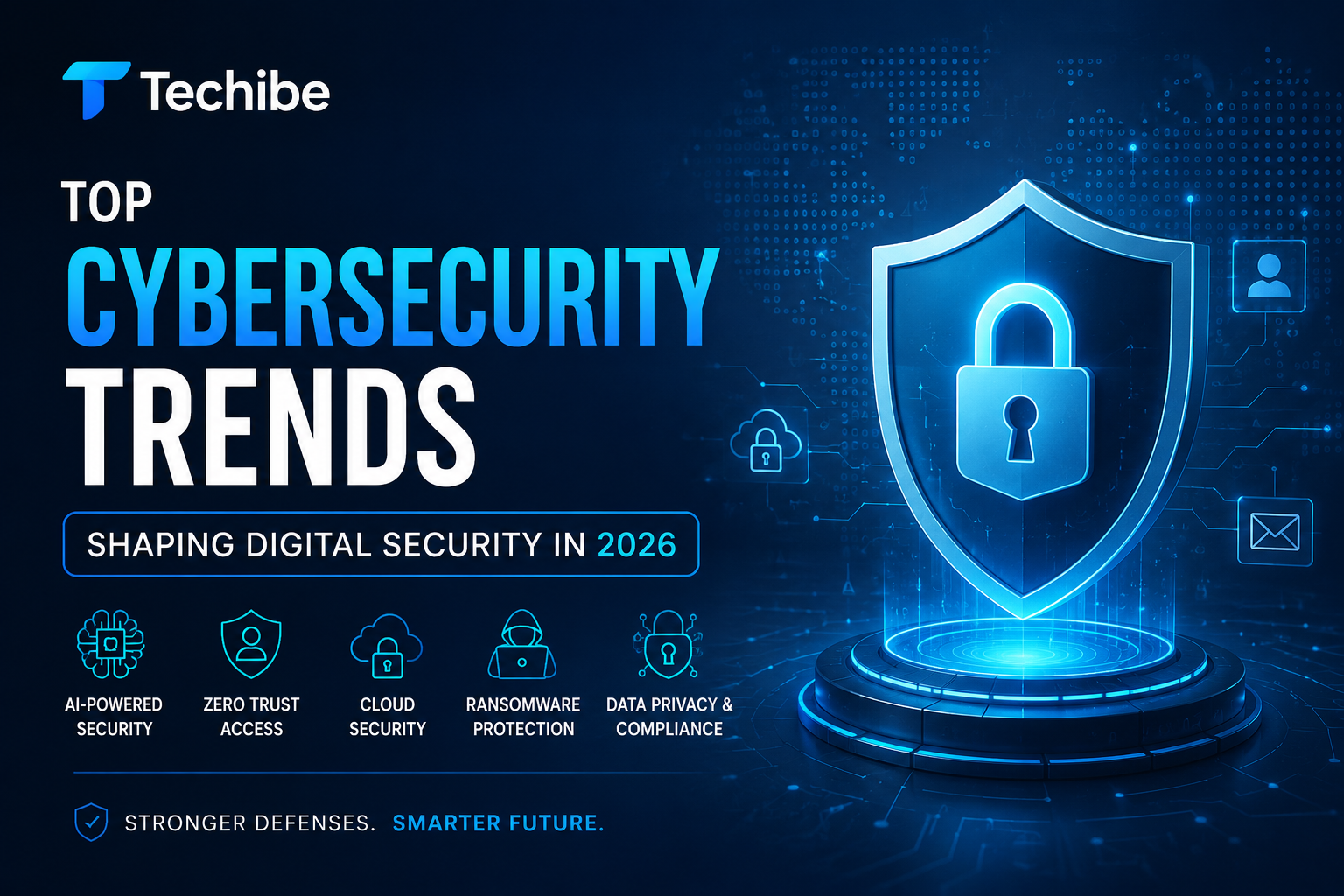
With evolving cyber threats, businesses and individuals are under immense pressure to improve their cybersecurity measures. AI-based assaults, more stringent data privacy laws — the cybersecurity environment in 2026 is as complex as ever. If organizations do not evolve in these areas, they risk losing money, damaging their reputation, and being unable to operate effectively.
Cybersecurity is no longer a check-box; IT priorities shift to become business priorities. By knowing the newest trends in cybersecurity, organizations can stay one step ahead of new threats and create more resilient cyber systems.
This article will examine the major cybersecurity trends shaping digital security in 2026 for businesses around the world.
AI-Powered Cybersecurity Is Becoming Essential
AI is a game changer for cyberattacks and analogous preparation. Phishing attacks are beginning to rely on AI-trained systems; hackers are also using AI to write malware and create vulnerabilities.
Simultaneously, AI is being employed in cybersecurity solutions to:
- Detect threats in real time
- Analyze network behavior
- Identify unusual activity patterns
- Respond to attacks faster
A critical component of existing AI security platforms that readily mitigate threats in advance.
Zero Trust Protection Models Gain Widespread Acceptance
Conventional security models of perimeter-based defense are becoming outdated. Modern enterprises operate in a cloud environment where machines, devices, and applications are located at numerous sites.
This has expedited the adoption of Zero Trust Architecture.
Zero trust operates on the basic principle of:
“Never trust, always verify.”
Key components include:
- Multi-factor authentication
- Continuous identity verification
- Least-privilege access
- Device monitoring
- Network segmentation
Incorporating a Zero Trust framework by organizations substantially limits the opportunities for unauthorized access.
Continuous Popularity of Cloud Security
Businesses continue their transition to the cloud, but securing cloud environments is increasingly tough.
Poorly configured cloud settings, weak access controls, and lack of monitoring continue to be widely recognized causes for data breaches.
Today, modern cybersecurity strategies concentrate a lot on:
- Cloud workload protection
- Identity and access management
- Continuous monitoring
- Secure APIs
- Data encryption
To secure sensitive information and maintain compliance, organizations must prioritize cloud security.
Ransomware Attacks Are Growing More Sophisticated
Ransomware continues to be one of the greatest cyber threats to businesses.
Attackers are increasingly targeting:
- Healthcare organizations
- Financial institutions
- Manufacturing companies
- Government agencies
Modern ransomware attacks involve:
- Data encryption
- Data theft
- Double extortion tactics
- Supply chain infiltration
To avoid risks, businesses must invest in:
- Regular backups
- Endpoint protection
- Employee training
- Incident response plans
A little preparation often spells the difference between recovery and catastrophic losses.
Multi-Factor Authentication Is Becoming Standard
Merely using passwords is no longer adequate.
Weak credentials remain a target for cybercriminals, who continue to use methods such as phishing or credential stuffing.
Multi-Factor Authentication (MFA) adds another level of security in authentication with a requirement for user verification through different methods.
Examples include:
- Authentication apps
- Biometrics
- Security tokens
- One-time passwords
Supply Chain Security Is Being Scrutinized More
Most organizations use various third-party vendors and software solutions.
However, attackers also take advantage of these relationships to penetrate and attack bigger targets.
Supply chain attacks have been particularly impactful in recent years, especially large-scale service providers. One vulnerability within one provider can affect thousands of organizations.
Businesses are responding by:
- Conducting vendor risk assessments
- Strengthening third-party security requirements
- Monitoring software dependencies
- Implementing stricter access controls
2026 is the year of supply chain security.
Cybersecurity Skills Shortages Keep Getting Larger
The availability of new talent is not keeping pace with the immense demand for cybersecurity professionals.
With threats increasingly becoming more sophisticated, organizations have difficulty searching for qualified professionals with skills in:
- Threat intelligence
- Cloud security
- Incident response
- Security architecture
- Compliance
Such a lack of talent is fueling more investment in:
- Automation
- Managed security services
- Employee training programs
- AI-powered security tools
Workforce development leads to a competitive edge for companies.
Data Privacy Regulations Are Expanding
Across the world, governments are keeping pace with new privacy laws to protect consumer-controlled data.
Organizations need to comply with several frameworks and standards.
These regulations emphasize:
- Data transparency
- User consent
- Secure data storage
- Breach reporting requirements
Non-compliance can result in significant financial penalties and damage a company’s reputation.
Robust cybersecurity practices help organizations comply with regulations, improve customer experience, and retain trustworthiness.
Why Endpoint Security Is More Critical Than Ever
The number of connected devices has expanded with remote work and hybrid environments.
Each laptop, smartphone, or IoT device can be seen as an attack vector.
Modern endpoint security focuses on:
- Device monitoring
- Threat detection
- Behavioral analysis
- Automated response
Endpoint protection is a critical element of enterprise cybersecurity strategy.
Human Error Is Still a BIG Threat
Even with the introduction of new technology and solutions, human error remains a primary reason for cybersecurity events.
Common mistakes include:
- Clicking phishing emails
- Using weak passwords
- Sharing sensitive information
- Ignoring software updates
Organizations are investing in cybersecurity awareness training to minimize these risks.
Creating a better first line of defense against cyber attacks through employee training.
The Future of Cybersecurity
With technology, new cyber threats will arise. Big opportunities are opened up along with new security challenges due to Artificial Intelligence, Cloud computing, and Digital Transformation.
Things leading to success for organizations in 2026 will be decided based on:
- Proactive threat detection
- Zero Trust frameworks
- Cloud security
- Employee awareness
- AI-powered defenses
- Regulatory compliance
Cybersecurity is no longer optional. It is an integral part of safeguarding digital assets, ensuring customer confidence, and establishing long-term business sustainability.
Final Thoughts
In 2026, the world of cybersecurity is constantly evolving, with rapid innovation and increasingly advanced threats. Only those businesses that remain educated and evolve with modern security practices will be prepared to face a changing array of risks.
If your organization needs help telling them apart, we’re here to bring you up to date on everything from AI-powered protection and Zero Trust architectures to cloud security and ransomware defenses.
Investing in cybersecurity today will ensure the security of the future as digital ecosystems become increasingly interconnected.