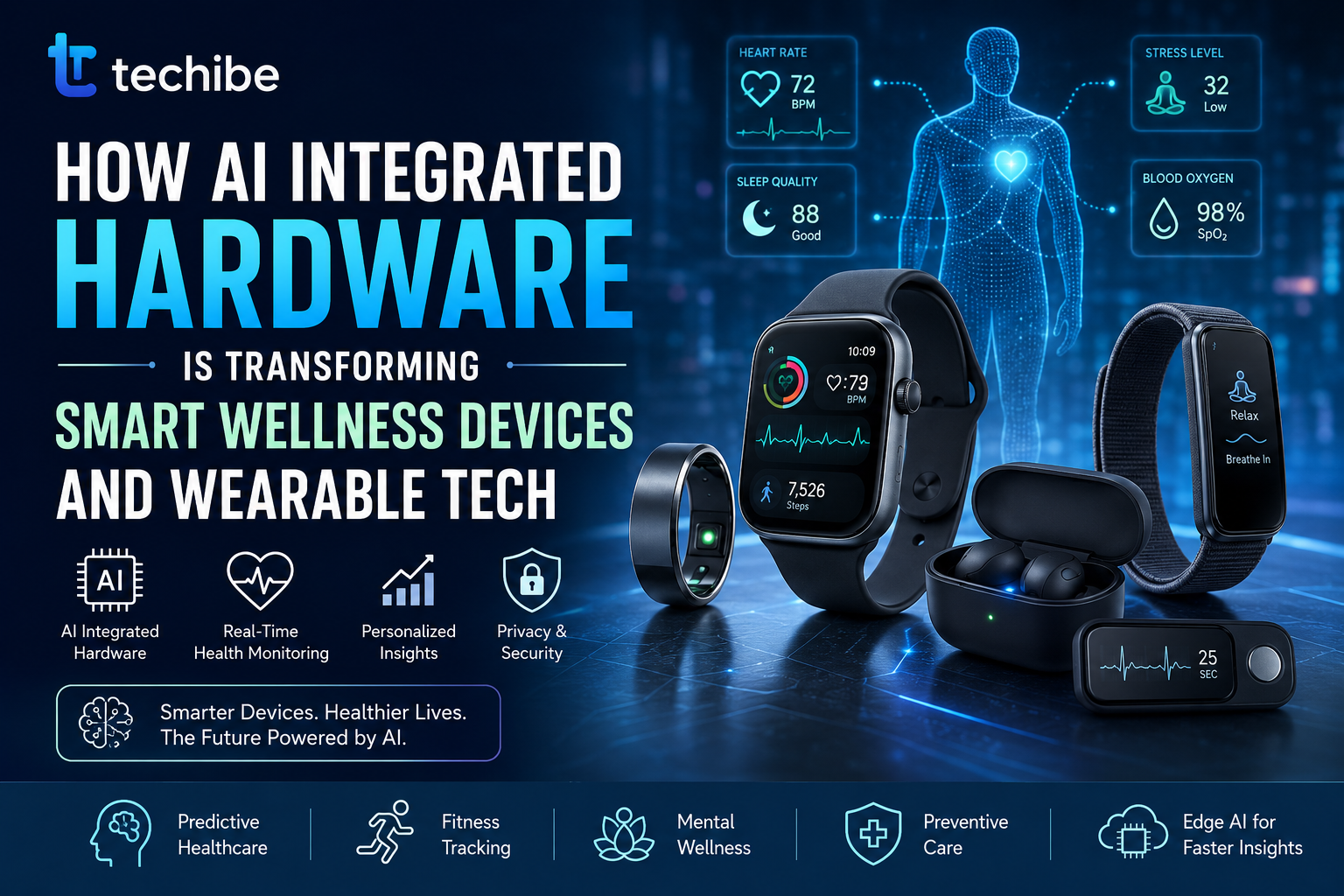
AI Integrated is no longer restricted to just software apps and cloud. The current trend of hardware embedded with AI is changing the game in everything from consumer electronics to wearables as well as industries including healthcare and fitness. With smart devices becoming more efficient in complex forms of functionalities the actual implementation of artificial intelligence (AI) with physical hardware has commenced, letting people on personalized methods for wellness, predictive health insights as well as data analysis on real-time.
Wearables such as smartwatches and fitness trackers have been around for a while, and are progressively being enhanced by faster, smarter, and more intelligent health sensing capabilities powered by AI. Not only are these innovations enhancing the user experience, but they are also reshaping how individuals observe and take care of their health.
In this article, we will discuss how AI integrated hardware is paving the way for smart wellness devices and wearable technology.
What Is AI Integrated Hardware?
AI embedded hardware are physical devices that directly include artificial intelligence into the architecture. Traditional systems that are typically deployed through cloud computing, AI-enabled hardware can process information locally instead of solely relying on an internet connection – enabling devices to make decisions, analyze data, and respond in real time.
Examples include:
- Smartwatches
- Fitness trackers
- Smart rings
- AI-enabled earbuds
- Wearable ECG monitors
- Smart glasses
- Health-monitoring sensors
Embedding AI in the hardware allows manufacturers to offer faster performance with lower latency while also providing better privacy.
Why AI Integrated Hardware Matters
Today, consumers expect their devices to do a lot more than just collect data. They desire actionable and personalized insights & recommendations.
Hardware-driven AI allows devices to:
- Monitor health continuously
- Detect abnormal patterns
- Provide real-time feedback
- Personalize user experiences
- Reduce dependence on cloud processing
- Improve energy efficiency
Together, this intelligence and portability is transforming wellness and wearable technology.
Wellness Devices Going Smart
Today, smart wellness tools have gone far beyond simple step counters or calorie trackers. Smart devices of today use AI to understand how the user behaves and furnish actionable health insights.
Popular examples include:
Smartwatches
Advanced smartwatches can monitor:
- Heart rate
- Blood oxygen levels
- Sleep patterns
- Stress levels
- Physical activity
AI algorithms analyze this information and offer suggestions that aid users in enhancing their well-being.
Smart Rings
Due to their small size and strong health-monitoring capabilities, smart rings have become increasingly popular.
These devices can track:
- Sleep quality
- Recovery metrics
- Body temperature
- Heart rate variability
Fitness routines and recovery can be optimized using AI-generated analysis.
Wearable ECG Devices
Wearable ECG monitors are gaining traction in the healthcare domain for continuous cardiac monitoring.
With AI integrated hardware, these devices can:
- Detect irregular heart rhythms
- Identify warning signs early
- Alert users and healthcare providers
This technology is changing healthcare from treatment based on symptoms to prevention.
Changing Scope of Wearable Tech With AI
Real-Time Health Monitoring
Traditional wearables mainly recorded information. Today’s devices analyze data instantly.
AI-enabled hardware that wearables can:
- Detect stress levels
- Analyze sleep cycles
- Monitor hydration
- Identify unusual heart activity
Users make better lifestyle decisions with real-time insights.
Personalized Recommendations
No two persons share the same health trends.
The AI algorithms learn user behavior gradually and give recommendation according to your requirement.
Examples include:
- Workout suggestions
- Recovery advice
- Sleep optimization tips
- Stress management recommendations
This degree of customization greatly enhances user interaction.
Predictive Healthcare
The best benefit of AI-enabled hardware platform is the predictive analysis.
Instead of only monitoring health data, devices can identify possible problems before they become dangerous.
Examples include:
- Detecting early signs of arrhythmia
- Identifying sleep disorders
- Monitoring blood pressure abnormalities
- Recognizing elevated stress levels
Predictive healthcare can minimize hospital visits and improve the quality of life.
Edge AI Provides Speedier Performance
Edge AI means when devices can perform local processing of information and not rely solely on cloud servers.
Benefits include:
- Faster responses
- Improved privacy
- Lower latency
- Reduced power consumption
- Enhanced reliability
This also means that users can get real time insight from any wearable device without having to wait for cloud-based analysis.
As edge computing continues to grow, AI integrated hardware will be even more efficient and powerful.
AI-Powered Fitness Tracking
Fitness trackers are getting smarter and smarter.
Modern devices can:
- Automatically recognize exercises
- Measure workout intensity
- Track calories burned
- Analyze recovery times
- Recommend training schedules
It uses artificial intelligence to help users do more and reduce injury potential.
That personalized touch is what makes fitness technology more powerful than ever before.
AI in Mental Wellness Devices
Mental health is becoming a key topic in wearable tech.
AI-powered devices can monitor:
- Stress levels
- Breathing patterns
- Sleep quality
- Emotional indicators
Smart wearables can suggest:
- Meditation exercises
- Breathing techniques
- Relaxation activities
These features are aimed at helping users stabilize their emotions and enhance other aspects of wellness.
AI If We Have Hardware Suitable For Healthcare
More and more healthcare providers continue to adopt AI-enabled devices.
Applications include:
Remote Patient Monitoring
Doctors would be able to monitor the health status of their patients constantly without needing a hospital visit.
Chronic Disease Management
Some wearable devices to keep track of conditions like:
- Diabetes
- Hypertension
- Cardiovascular diseases
Early Disease Detection
AI algorithms help in spotting patterns that humans could miss, leading to early intervention and better prognosis.
Challenges Facing AI Integrated Hardware
Though this is very useful, hardware containing integrated AI also come with a bunch of challenges.
Data Privacy Concerns
Health data is highly sensitive.
Manufacturers must prioritize:
- Encryption
- Secure storage
- User consent
- Regulatory compliance
Battery Limitations
Energy-efficient hardware is key to advanced AI processing.
Companies are still betting their chips on low-power AI chips to save battery time.
Accuracy and Reliability
Readings that are not correct can have deadly consequences.
Manufacturers need to provide devices that offer consistency and accuracy in results.
AI Integrated Hardware: The Future
Emerging trends include:
- Smart clothing with embedded sensors
- AI-powered hearing devices
- Brain-computer interfaces
- Continuous glucose monitoring wearables
- Advanced biometric authentication
Hardware integrated with AI will continue to shrink, evolve and become more intelligent as well.
Final Thoughts
AI into devices changing smart wellness hardware and wearable tech from the roots. From predictive healthcare to real-time monitoring, or personalized fitness recommendations, these innovations are changing how people manage their health and wellness.
As AI, edge computing and sensor technology continues to develop the wearables will become even more sophisticated and essential. The stage where the models receive the new medical data by means of AI integrated hardware, and subsequent response which will enable healthier, smarter and connected lives for businesses, healthcare providers & consumers alike.
Frequently Asked Questions
What is AI integrated hardware?
AI enabled hardware, is the physical device which has the built-in ability of artificial intelligence to carry out data processing and decision making by realizing real-time insights without depending completely upon cloud computing.
How is AI integrated hardware used in wearable tech?
Smart Watches, Fitness Trackers, Smart-Rings and Health-Monitoring Devices use AI integrated hardware for health metrics analytics with personalized recommendations as well as predictive healthcare.
What are smart wellness devices?
Smart wellness devices connected to the Internet of Things (IoT) collect information about health, fitness, sleep, stress and other metrics in relation to wellness using sensors and AI.
What are the advantages of hardware with integrated AI?
Advantages consist of faster processing, continuous monitoring, personalized experiences, higher privacy, proactive health insights and greater energy efficiency.
What will the future of hardware integrations with artificial intelligence?
Future trends involve smart clothing, advanced biometrics devices, brain-computer interfaces and AI-powered health care solutions built for preventive patient-specific treatments.