Soaring iPad and Xbox Prices Reveal the Hidden Cost of the Global Memory Chip Crisis
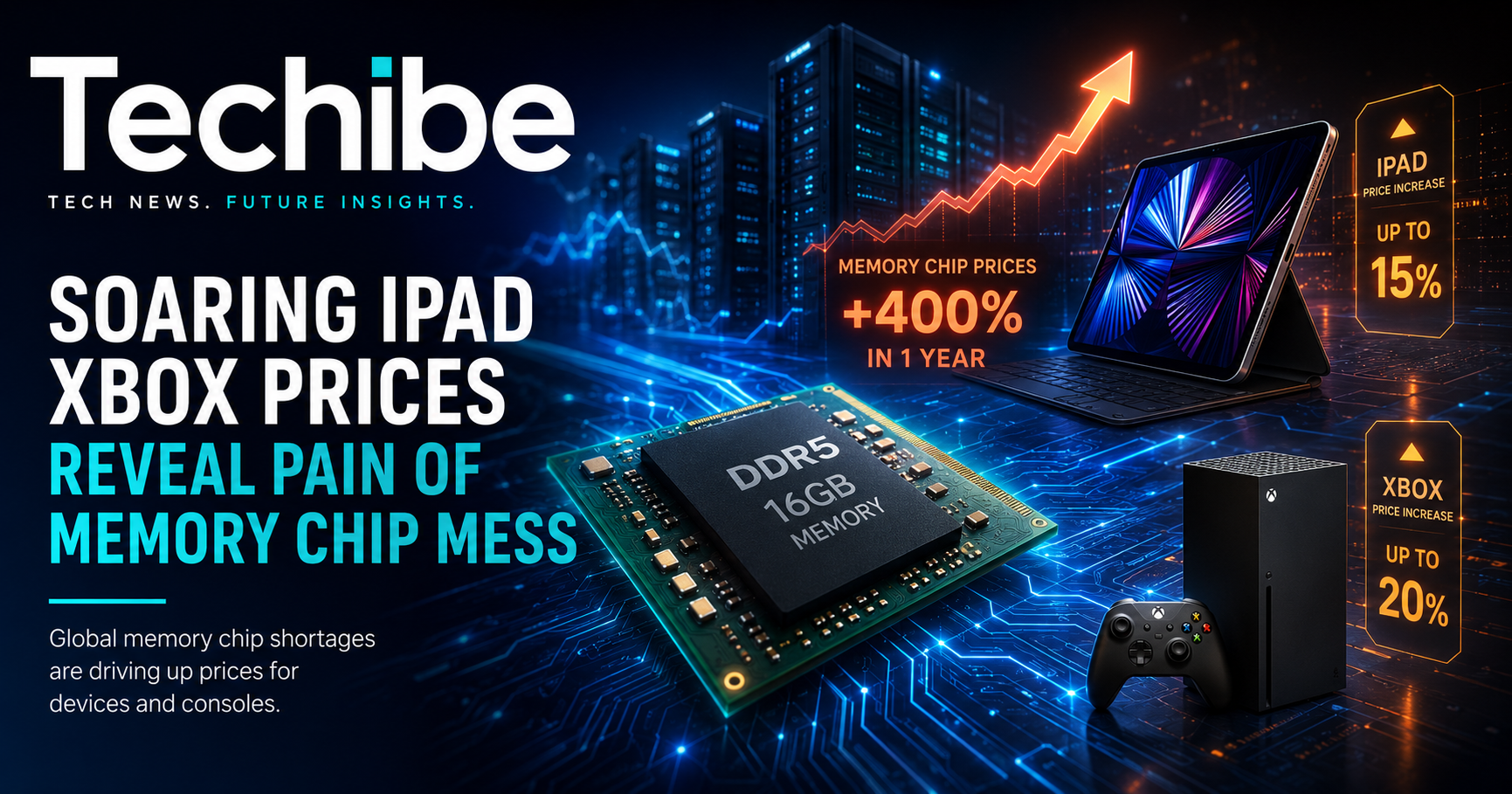
Consumers shopping for new iPads, gaming consoles, and premium electronics are beginning to feel the financial impact of a problem most people never see: the global memory chip shortage. As artificial intelligence continues to consume unprecedented amounts of computing hardware, memory chip manufacturers are struggling to meet demand, forcing electronics companies to raise prices across several product categories.
According to recent industry reports, Apple, Microsoft and other tech giants have raised prices on select devices as the cost of DRAM and NAND flash memory continues to rise. What was once seen as a temporary supply problem has become a long-term structural challenge for the entire tech industry.
AI Is Reshaping the Memory Market
The rapid growth of generative AI has fundamentally changed how semiconductor companies allocate manufacturing capacity. High-performance AI servers require significantly more advanced memory than traditional consumer devices, making very large-scale data centers one of the industry's most profitable customers.
Companies building AI infrastructure – including cloud service providers and AI developers – are buying up massive amounts of high-bandwidth memory (HBM) and DDR5 modules to support powerful AI models.
As manufacturers prioritize these high-margin products, available supply for smartphones, tablets, laptops, and gaming consoles has shrunk significantly.
The result is a ripple effect across the consumer electronics market.
Why Are iPad and Xbox Prices Increasing?
Memory chips are a vital component of nearly every modern electronic device. Whether it’s an iPad, Xbox Series X, gaming PC, or high-end smartphone, these products rely on DRAM and NAND flash memory to deliver optimal performance and user experience.
With memory prices rising, manufacturers are left with limited options:
Absorb higher production costs and reduce profit margins.
Increase retail prices.
Delay or reduce product launches.
Launch fewer hardware upgrades.
Several companies have chosen to raise prices rather than sacrifice profitability, meaning consumers end up bearing some of the additional cost.
The Growing Importance of High-Bandwidth Memory
One of the biggest reasons for the shortage is the explosive demand for high-bandwidth memory (HBM).
Unlike conventional memory used in consumer electronics, HBM is specifically designed for high-performance AI accelerators and GPUs. It offers much higher bandwidth while consuming less power, making it essential for modern AI workloads.
Major semiconductor manufacturers have shifted their production to HBM as demand from AI companies continues to outstrip supply.
This shift has reduced available production capacity for traditional memory products and led to higher prices in consumer markets.
Industry Leaders Are Investing Billions
To address this shortage, leading memory manufacturers are expanding their manufacturing capacity.
Samsung Electronics, SK Hynix, and Micron Technology have announced multibillion-dollar investments in advanced manufacturing facilities capable of producing next-generation memory chips.
However, semiconductor production cannot be expanded overnight.
Building new manufacturing plants requires:
Advanced lithography equipment
Specialized cleanrooms
Skilled engineering teams
Regulatory approvals
Years of manufacturing and testing
Industry analysts expect supply constraints to continue into the second half of the decade.
AI Is Changing the Economics of Electronics
The memory shortage illustrates how artificial intelligence is reshaping industries beyond software.
Every new AI model requires thousands of GPUs, each containing large quantities of advanced memory. As investment in AI infrastructure accelerates worldwide, semiconductor companies naturally prioritize customers willing to pay premium prices.
This creates intense competition between AI infrastructure providers and traditional consumer electronics manufacturers for the same manufacturing resources.
The trend demonstrates that AI's rapid expansion carries indirect consequences for consumers who may never use generative AI themselves.
Could Prices Return to Normal?
Market conditions depend largely on how quickly semiconductor manufacturers can ramp up production.
If new manufacturing plants come online as scheduled and AI demand stabilizes, memory prices could gradually improve over the coming years.
However, if AI adoption continues at its current pace, supply may remain constrained for longer than anticipated.
Many analysts believe the industry could experience price increases through at least 2028.
What This Means for Buyers
Consumers planning to purchase premium electronics should be prepared for continued price volatility.
Waiting for traditional seasonal discounts may not deliver the savings seen in previous years if component costs remain elevated.
Businesses, meanwhile, may increasingly prioritize hardware lifecycle management, repairs, and upgrades rather than frequent equipment replacement.
Conclusion
The price hikes for iPads, Xbox consoles, and other consumer devices are no longer isolated pricing decisions—they are signs of a much larger transformation in the semiconductor industry.
Artificial intelligence has dramatically increased global demand for advanced memory chips, forcing manufacturers to prioritize data centers and AI hardware over consumer electronics.
Until new semiconductor capacity comes to market, consumers should expect memory component costs to remain under pressure, making high-tech products more expensive than anticipated.
Why AI Is Driving the Global GPU Shortage
Understanding High-Bandwidth Memory (HBM)
FAQs
Why are iPad and Xbox prices increasing?
The primary reason is the rising cost of memory chips, driven by strong demand from AI infrastructure and data centers.
What is causing the memory chip shortage?
Growing investment in artificial intelligence has significantly increased demand for advanced memory technologies such as HBM and DDR5.
Which companies manufacture these memory chips?
Major producers include Samsung Electronics, SK Hynix, and Micron Technology.
Will electronics become cheaper again?
Prices may stabilize as new semiconductor production facilities become operational, but analysts expect supply constraints to persist for several years.
Does AI really affect consumer electronics prices?
Yes. AI servers require enormous quantities of advanced memory, reducing available supply for consumer devices and increasing manufacturing costs.