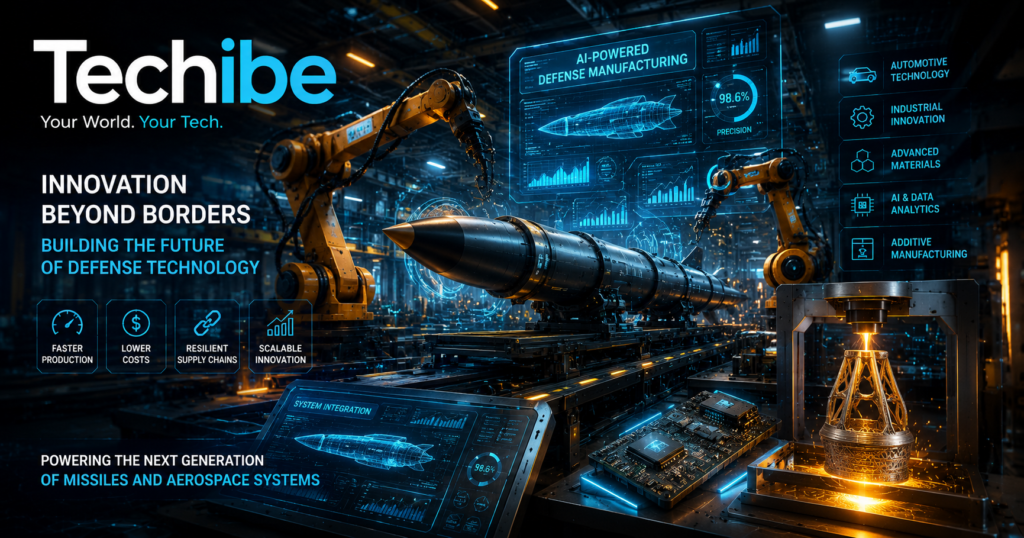
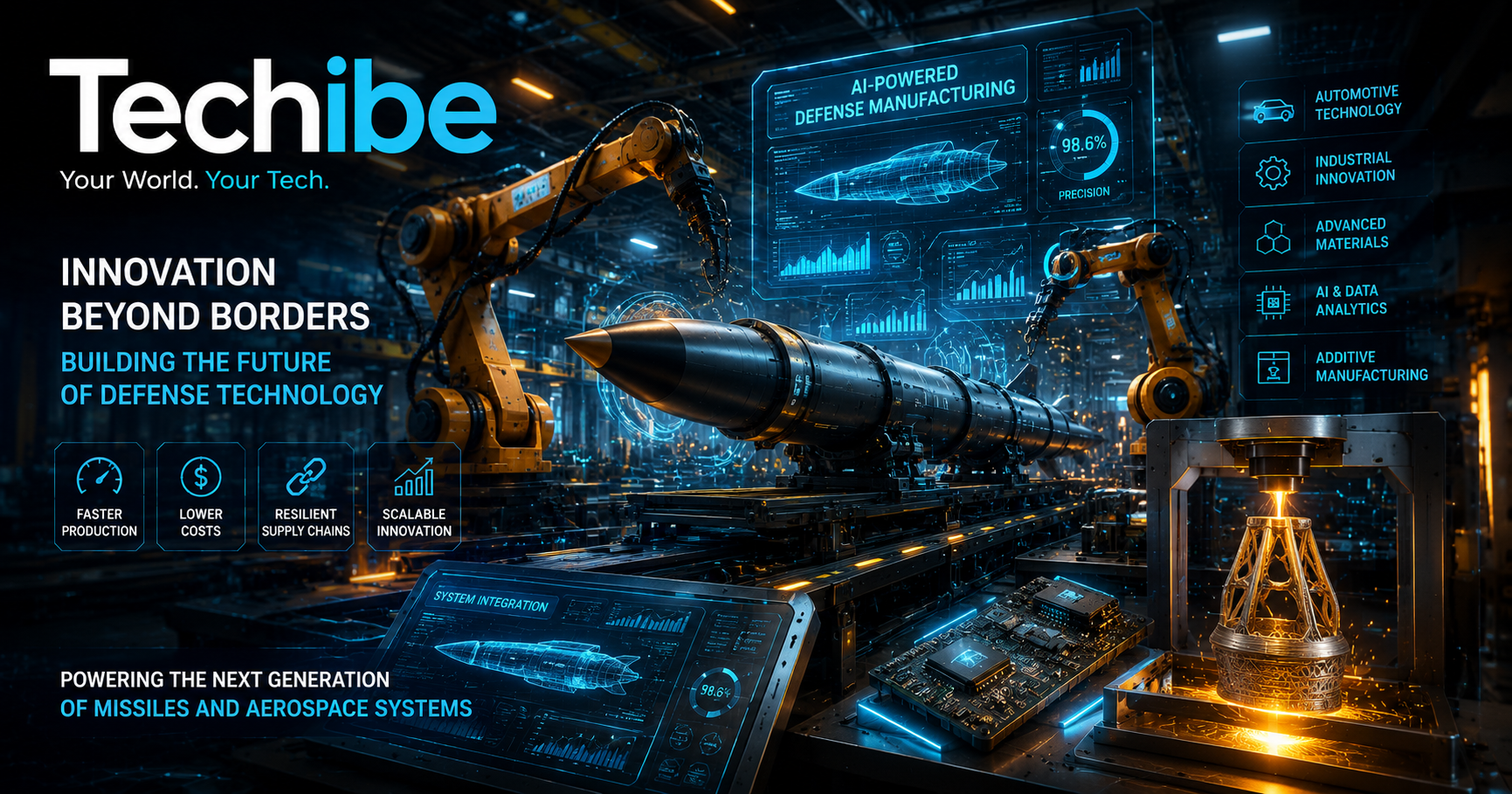
Defense Startups Turn to Auto and Energy Industries to Accelerate Weapons Production
A new generation of defense-tech startups is transforming the way military equipment is manufactured—not by relying on traditional aerospace technologies, but by leveraging innovations originally developed for sectors such as automotive, oil and gas, pharmaceuticals, and industrial manufacturing.
Instead of relying entirely on traditional defense supply chains, these companies utilize components, equipment, and technologies originally designed for electric vehicles, drilling machinery, industrial production lines, and other commercial applications.
This new approach will help them produce missiles, rocket engines, and defense systems faster, cheaper, and more flexibly, an issue that has become increasingly important as global demand for defense equipment increases.
The defense industry is changing its production model.
For a time big defense companies have been working with special suppliers and making custom parts. This process usually takes a lot of time and money.
Now some new startups are doing things differently.
They are not making every part from the start. Instead they are using things that are already made for industries.
This way they can save money. Make things faster. They can also use supply chains that are already working well.So the time it takes to get a product, from the design stage to actually being made and used is much shorter.
Automotive industry technologies have entered defense equipment
One of the most important changes is the increasing use of technologies that were originally developed for the automotive industry.
Modern cars, especially electric cars, use advanced sensors, processing computers, navigation systems, electronics, and highly advanced manufacturing methods.
Now, some defense startups like Castelion are using these technologies to develop missile guidance systems and military equipment.
Using parts that are mass-produced for the automotive industry not only reduces costs, but also allows for rapid increases in production capacity, an advantage that is of great importance in the context of increasing global demand for defense equipment.
Innovation has moved from civilian industries to the defense industry.
The changes are not limited to the automotive industry.
Some defense technology companies are using equipment that was previously designed for the oil and gas industry, while others are repurposing technologies used in pharmaceutical manufacturing to make rocket fuel.
At the same time, 3D printing technology has become an important tool for manufacturing rocket engines and complex components.
In the past, many of these parts could take months to produce, but now some can be produced in just days or even hours
Combining these technologies with commercial supply chains is fundamentally changing the way defense equipment is manufactured and could transform the future of the defense industry.
Why have defense startups turned to commercial technologies?
One of the most important reasons for this change is the increasing need to produce defense equipment more quickly.
In recent years, military conflicts and increased geopolitical tensions have led many countries to seek to increase the production capacity of missiles, drones and defense systems.
But the traditional defense supply chain often faces limitations such as high cost, limited production capacity and long lead times.
In contrast, commercial technologies used in the automotive, energy and industrial manufacturing industries are already produced on a large scale and can therefore significantly increase the speed of defense equipment production.
3D printing is revolutionizing the production of military equipment
Defense startups are really getting into printing.
This technology is very useful.
Companies like X-Bow Systems and Firehawk Aerospace are using 3D printing to make things like rocket engines and complex parts.3D printing is great for reasons:
* It makes production much faster
* It reduces the cost of making parts
* It lets people design complex parts
* It reduces the need for supply chains
* It makes prototyping and testing
So defense startups can design, test and start making new equipment much faster with 3D printing.They can get things made and out to people who need them much quicker than they could before, with 3D printing.
The US government also supports this development.
As defense startups grow, the U.S. government is also trying to increase the production capacity of military equipment.
In recent years, the Pentagon has allocated billions of dollars to develop the supply chain, increase missile production, and support innovative companies.
The main goal of these investments is to reduce dependence on limited manufacturers and create a wider network of technology companies that can meet defense needs more quickly in critical situations.
For this reason, defense technology startups play a more prominent role in military projects today than in the past.
Business technologies are blurring the lines between industries.
One of the most important messages of this transformation is that the boundaries between different industries are gradually disappearing.
Technologies that were once developed for electric cars, drilling equipment or pharmaceutical production lines are now also used in the manufacture of missiles and defense systems.
This trend suggests that the future of innovation will be based more than ever on technology transfer between different industries, where a technology can be used in several completely different areas.
conclusion
Defense technology startups are transforming the traditional way military equipment is built, leveraging technologies from the automotive, energy, pharmaceutical, and advanced manufacturing industries.
The use of commercial components, 3D printing, and new manufacturing methods has not only reduced costs but also accelerated the development and production of defense systems.
As governments increase their investment in defense and emerging technologies grow, collaboration between the commercial and defense industries is expected to expand more than ever before—a shift that could redefine the future of defense, advanced manufacturing, and industrial innovation for years to come.
FAQs
1. Why are defense technology startups using automotive and industrial components?
They are leveraging commercially available technologies to reduce production costs, shorten development cycles, and scale manufacturing more efficiently than traditional defense supply chains.
2. Which industries are influencing modern defense manufacturing?
Defense startups are adopting technologies from the automotive, oil and gas, pharmaceutical, advanced manufacturing, and additive manufacturing sectors.
3. How is 3D printing changing weapons production?
3D printing enables companies to manufacture complex rocket engines and missile components much faster, reducing production times from months to days—or even hours for certain parts.
4. Why is the Pentagon supporting defense startups?
The U.S. Department of Defense is investing in innovative companies to strengthen domestic manufacturing capacity, improve supply chain resilience, and accelerate the production of next-generation military systems.
5. What does this trend mean for the future of defense technology?
The growing integration of commercial technologies into defense manufacturing is expected to accelerate innovation, lower production costs, and reshape how military equipment is designed and produced worldwide.