The smart glasses industry has spent years trying to deliver a product that consumers genuinely want. Despite billions of dollars in investment, many companies have struggled to overcome hardware limitations, software challenges, and weak consumer adoption.
Now, smart glasses manufacturer Xreal believes the market is finally reaching a turning point.
At Google I/O 2026, Xreal founder and CEO Chi Xu unveiled Project Aura, the company’s latest smart glasses platform developed in partnership with Google. The announcement highlights growing confidence that wearable XR technology is finally ready for mainstream adoption.
What Is Project Aura?
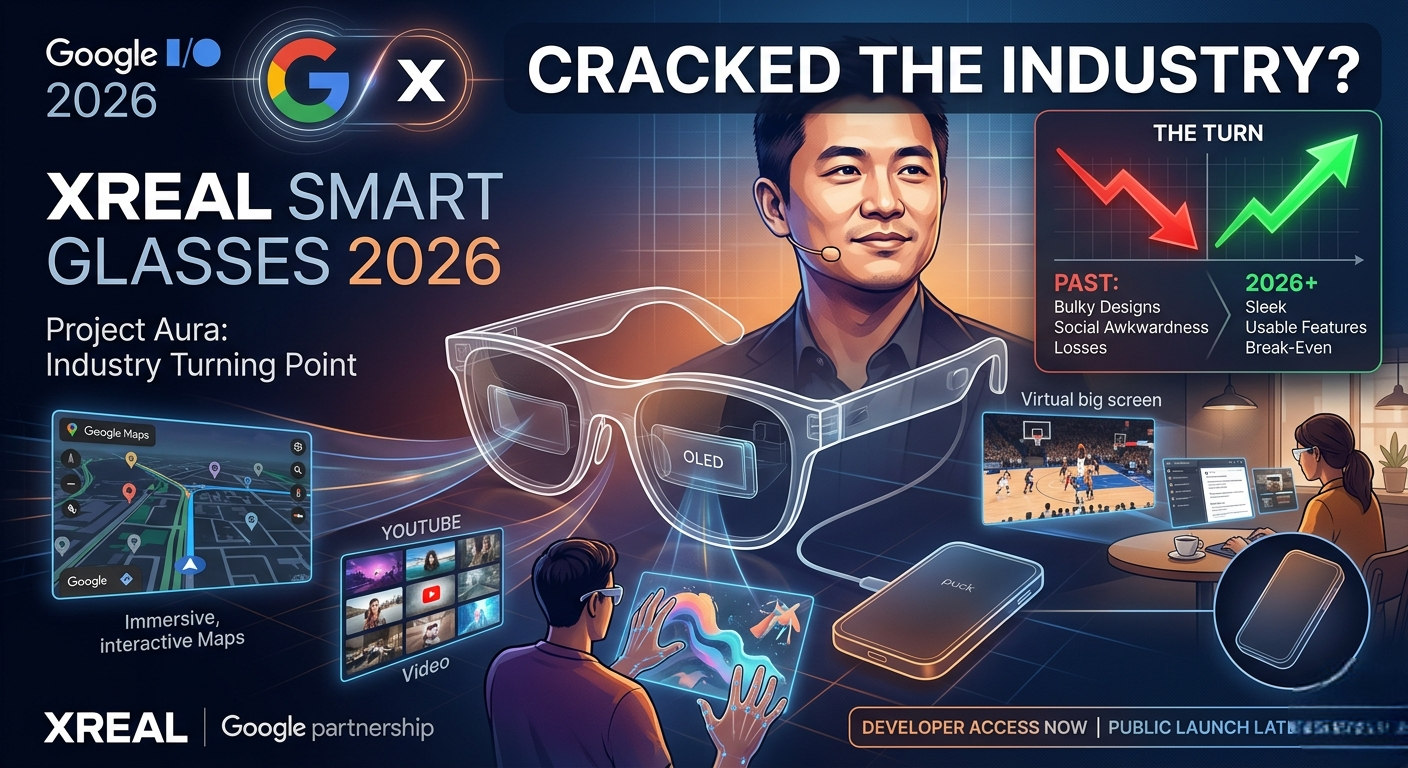
Project Aura is Xreal’s newest generation of smart glasses featuring OLED displays embedded directly into the lenses.
Unlike standalone headsets, Aura connects to a compact phone-sized computing device, often referred to as a “puck,” which handles processing and powers the experience while remaining in the user’s pocket.
The system allows users to:
- Navigate with immersive Google Maps experiences
- Watch VR and YouTube content
- Create holographic artwork using hand tracking
- Play games in mixed reality environments
- Browse the web through a wearable display
- Work remotely using virtual screens
According to Xreal, the experience is designed to remain seamless whether users are working from a coffee shop, cooking at home, or enjoying entertainment on a virtual large-screen display.
More Than Just Entertainment
While many smart glasses products focus primarily on media consumption, Xu emphasized that Project Aura is designed to be a productivity tool as well.
He explained that users can enjoy immersive entertainment experiences while also performing everyday tasks such as browsing, multitasking, and working remotely.
This broader use case could help smart glasses move beyond the niche audience that has limited adoption in the past.
Why Smart Glasses Have Struggled for Years
For more than a decade, the smart glasses industry has faced several major obstacles:
Bulky Hardware
Many devices were too large, heavy, or uncomfortable for extended wear.
Limited Software Ecosystems
Early smart glasses often lacked compelling applications that justified their cost.
Social Acceptance Challenges
Users frequently felt uncomfortable wearing devices that looked unusual in public settings.
High Development Costs
Research, manufacturing, and software development have required massive investments while generating relatively limited revenue.
As Chi Xu openly acknowledged:
“Everybody’s losing money”
He Said;
“That’s because it’s very hard, what we’re doing.”
The Industry’s Turning Point
The market began showing signs of progress in 2023 when Meta partnered with Ray-Ban to launch smart glasses that achieved meaningful consumer sales.
Although Meta’s Reality Labs division continues to operate at a loss, the success of its products demonstrated that consumer demand for wearable AI and smart glasses may finally be emerging.
Xu believes success depends on three critical factors coming together:
- Mature hardware
- A stable operating system
- An intuitive user interface
According to Xreal, all three components are now in place.
Who Is Xreal?
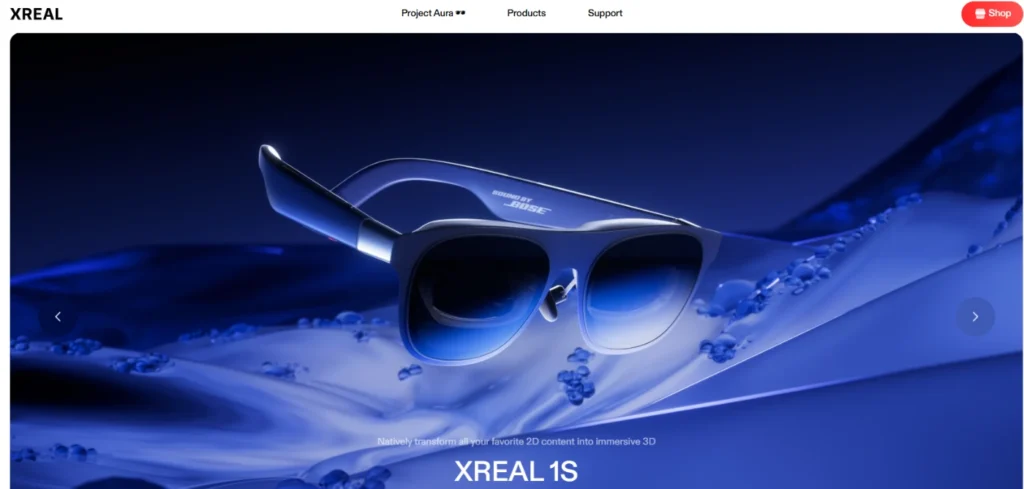
Xreal is a Chinese technology company founded by Chi Xu and focused on augmented reality (AR) and extended reality (XR) hardware.
Over the past several years, the company has established itself as one of the most recognized names in the XR industry. Its partnership with Google provides additional credibility and access to a broader ecosystem of developers and software experiences.
The company has also been improving its financial performance by increasing gross margins while reducing sales and marketing costs.
Xu stated that Xreal could potentially reach break-even profitability as early as next year.
What’s Next for Project Aura?
Project Aura is currently available only to developers, allowing software creators to build applications and experiences ahead of a wider launch.
Xreal plans to release the device to consumers later in 2026.
The company is also preparing for a potential IPO before the end of the year, although specific details regarding valuation and timing have not yet been disclosed.
Competition Is Intensifying
The smart glasses market is becoming increasingly competitive.
Major technology companies and startups are investing heavily in wearable computing, including:
- Meta
- Apple
- Google-backed hardware partners
- Emerging XR startups
As AI, augmented reality, and wearable computing continue to converge, smart glasses could become one of the most significant consumer technology categories of the next decade.
Final Thoughts
With Project Aura, Xreal is making a strong case that smart glasses are finally ready for mainstream adoption.
Backed by Google, equipped with advanced OLED displays, and focused on both productivity and entertainment, Aura represents one of the most ambitious smart glasses launches of 2026.
Whether the industry has truly reached its breakthrough moment remains to be seen, but Xreal is betting that the future of computing will be worn, not held.