Digital Realty's $3.5 Billion Data Center Deal Signals the Next Phase of AI Infrastructure
As AI continues to grow at an unprecedented rate, companies are racing to build the infrastructure to run and support these models.
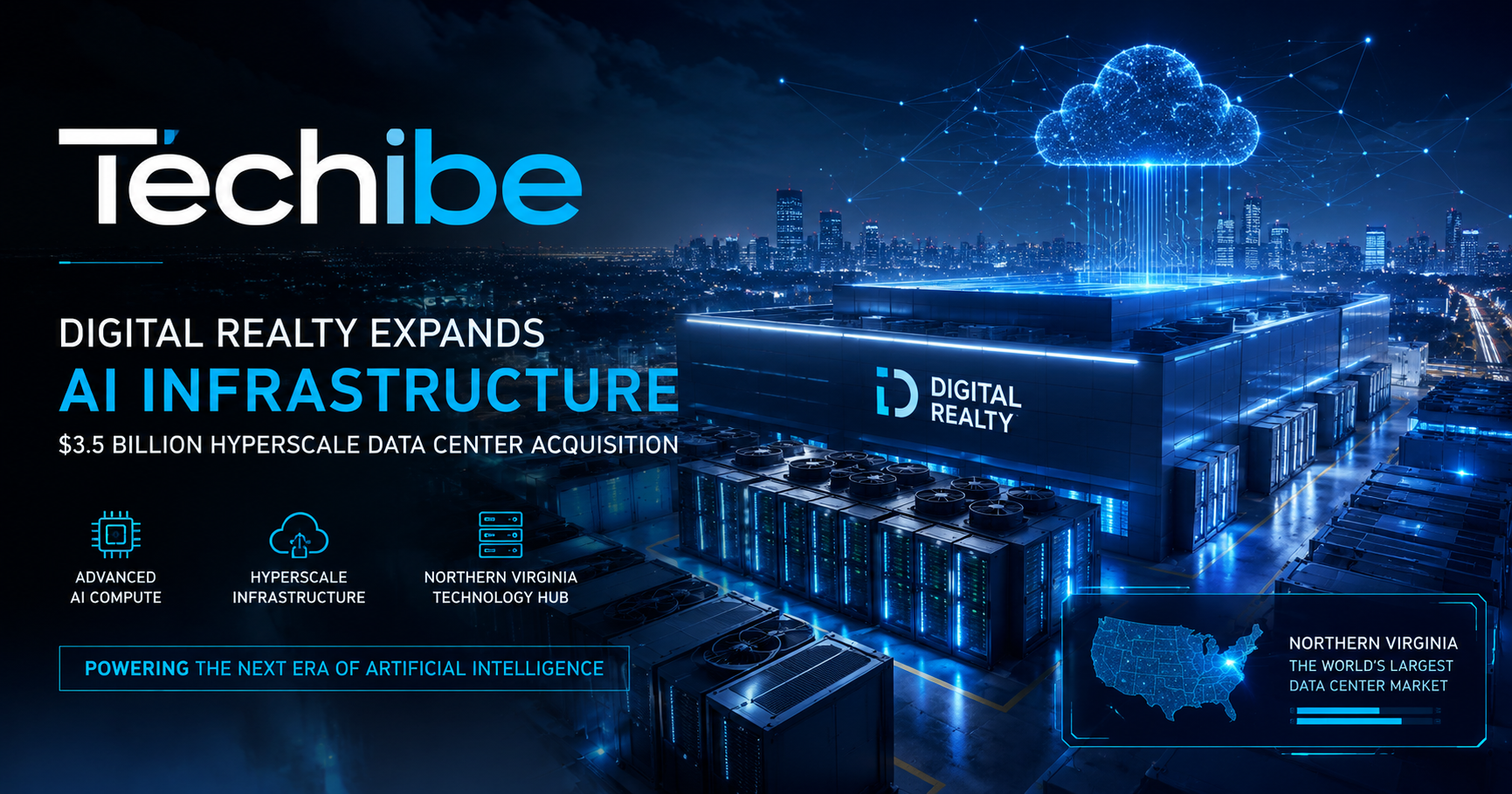
Digital Realty has announced that it will pay $3.5 billion to acquire Blackstone’s stake in a hyperscale data center complex in Northern Virginia, a region known as one of the world’s largest cloud computing and data center hubs.
demonstrates that data centers have become one of the most valuable assets in the AI era.
As companies increasingly use AI models, process massive amounts of data, and develop AI-based services, access to powerful computing infrastructure has now become a critical competitive advantage.
Why is this deal important?
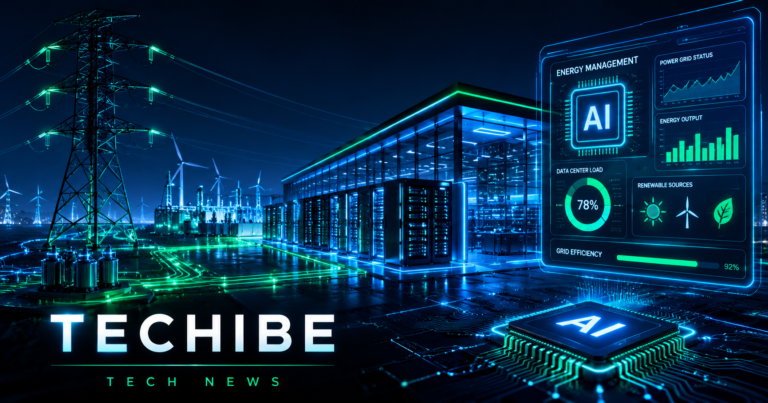
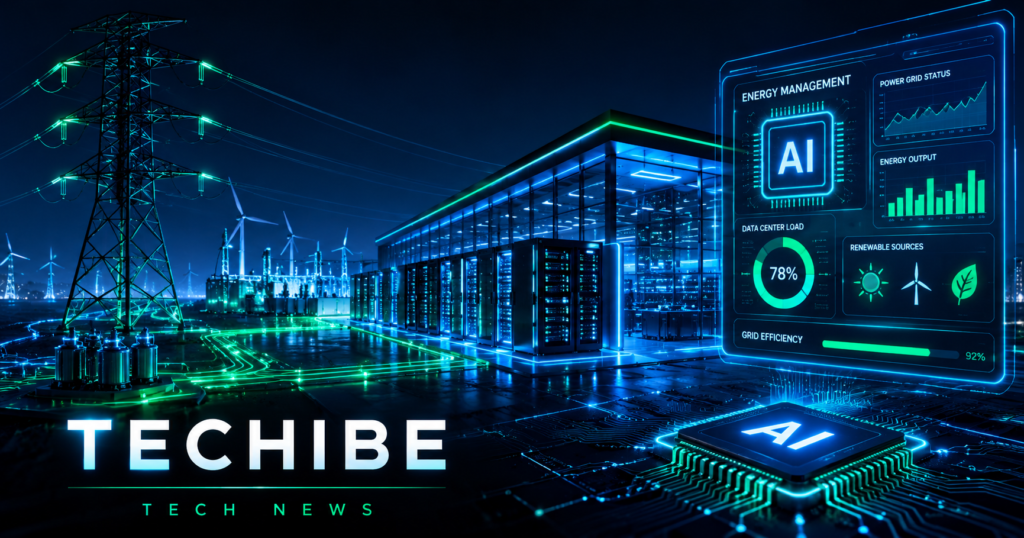
Data centers used to be a place to store servers, but now training and running advanced models and high-speed processing require fast networks, stable power, and robust cooling.
Almost all modern AI services, from productive chatbots to enterprise automation systems, run on hyperscale data centers that can manage thousands of graphics processing units (GPUs) simultaneously.
The data center complex included in the deal is located in Northern Virginia, a region considered one of the world’s most important digital infrastructure hubs and home to major cloud companies, financial institutions, government entities and enterprise customers.
By increasing its stake in the complex, Digital Realty strengthens its position in a market where demand continues to grow faster than available capacity.
Artificial intelligence has created a new wave of investment in data centers.
AI has completely changed the economics of data centers.
Previously, companies would beef up their data centers for cloud and internet services, but now AI has put a lot of demand on companies.
Running large AI models requires large GPUs to run non-stop.
That’s why data center operators are investing billions of dollars in:
AI-optimized data centers
Dense GPU-based infrastructure
Advanced cooling systems
Renewable energy
Ultrafast networks
Large-scale power distribution infrastructure
The Digital Realty deal shows that infrastructure companies are preparing for decades of AI-driven growth, not just short-term market needs.
Competition over AI infrastructure is intensifying
The demand for increased AI processing has skyrocketed for companies operating in the field and has become one of the most important parameters.
Tech giants such as Microsoft, Google, Amazon, Meta and Oracle have invested billions of dollars in expanding their data center capacity to meet the growing demand for AI models.
Meanwhile, companies such as Digital Realty are also trying to establish themselves as major providers of AI infrastructure by expanding their ownership of data centers.
The competition shows that from now on, the most important issues in today's world can be access to data center space and processing equipment, and high-speed internet is becoming equally important.
Why are investors paying special attention to data centers?
Data centers are no longer just physical assets, but the most important infrastructure of the digital economy.
With the rapid growth of artificial intelligence, the value of these assets has also increased.
Investors believe that companies that own powerful AI infrastructure will enjoy sustainable revenue growth in the coming years, as almost all AI-based services will require more processing capacity.
For this reason, investment funds and large financial companies are showing increasing interest in investing in the data center market.
What does this deal mean for the future of the AI industry?
The $3.5 billion acquisition of Digital Realty is not just a business deal; it is a sign of a changing direction in the technology industry.
In the past, the main competition was to produce faster processors or develop advanced software.
Now, infrastructure has become just as important.
As AI models become larger and more complex, their needs for electricity, cooling systems, powerful GPUs, and advanced data centers also increase.
For this reason, many analysts believe that in the coming years, companies that own AI infrastructure will be as valuable as the developers of AI models.
conclusion
Digital Realty’s $3.5 billion deal to increase ownership of hyperscale data centers in Northern Virginia marks a new phase in the global race for AI infrastructure.
With the increasing demand for cloud computing, generative models, and AI-heavy processing, data centers have become one of the technology industry’s most important strategic assets.
This deal shows that the future of AI is not just about improving algorithms; more than ever, companies’ success will depend on their ability to build powerful, scalable, and sustainable infrastructures.
In the coming years, the competition among tech companies will likely be less about building new models and more about building bigger data centers, faster networks, and the infrastructure that will enable the next generation of AI.
FAQs
1. Why is Digital Realty acquiring Blackstone's data center stake?
Digital Realty is expanding its ownership of hyperscale data centers to meet the rapidly growing demand for AI infrastructure, cloud computing, and enterprise workloads.
2. Why are data centers becoming more valuable?
Artificial intelligence applications require massive computing power, high-density GPU clusters, reliable electricity, and advanced cooling systems, making modern data centers critical digital infrastructure.
3. How does AI increase demand for data centers?
Training and running large AI models consume significantly more computing resources than traditional enterprise applications, driving unprecedented demand for hyperscale data center capacity.
4. Why is Northern Virginia important for cloud computing?
Northern Virginia is one of the world's largest data center hubs, hosting major cloud providers, enterprise customers, internet infrastructure, and hyperscale facilities.
5. What does this deal mean for the future of AI?
The acquisition highlights that AI competition is shifting beyond software and chips toward ownership of the infrastructure needed to power next-generation artificial intelligence.