Microsoft CEO Satya Nadella Warns Against an AI Monopoly
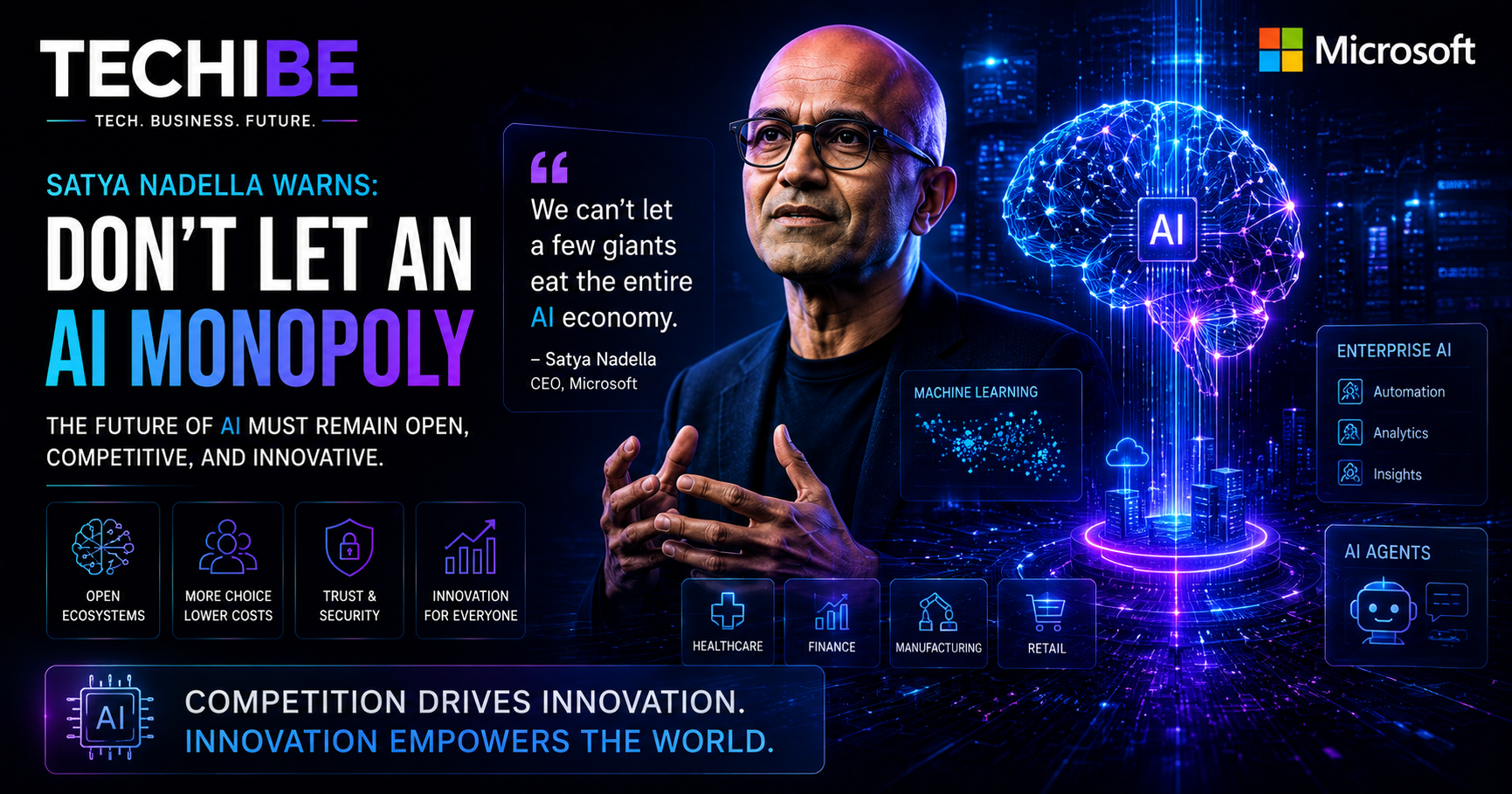
As tech companies continue to compete to develop AI, concerns about the concentration of power in the hands of a few large companies have also grown. Microsoft CEO Satya Nadella emphasized in a recent interview that the future of AI should not be one where only a few large companies control the technology.
According to Nadella, the real growth of AI will happen when startups, developers universities and small companies can also access AI models infrastructure and tools and develop their own products without being dependent on one or two large companies.
His comments come as companies such as Microsoft OpenAI Google Meta Amazon Nvidia, and Anthropic have invested billions of dollars in developing language models, data centers, and AI infrastructure, and competition in this market is becoming fiercer every day.
Why Nadella Is Concerned About an AI Monopoly
nedla believes that innovation in the industry will decline if a small number of companies control AI models, data centers and development tools.
He says that too much concentration of power can lead to problems such as:
Reduced competition
Increasing cost of AI services
Limited user choice
Companies locked into one provider
Slowing pace of innovation
She emphasizes that just as the Internet and cloud computing grew with competition between different companies the future of artificial intelligence must also be shaped by healthy competition.
Competition Drives Innovation
The history of the technology industry has shown that competition drives faster progress.
For example:
Competition between Apple, Samsung, and Google led to the rapid growth of the smartphone market.
Competition between Microsoft Azure, Amazon Web Services, and Google Cloud led to the development of cloud services.
Competition between web browsers also improved the user experience.
Nadella believes that artificial intelligence also needs such a space to thrive - a space where different companies can test new ideas and users have more choice.
The Rise of AI Infrastructure
The AI landscape is no longer limited to building language models.
Large companies are now investing in various parts of the ecosystem
including:
AI Processors
Massive Data Centers
Cloud Services
AI Development Tools
Machine Learning Frameworks
AI Agents
For this reason a company capable of offering a comprehensive suite of hardware, software and cloud services will have a better chance of leading the market.
Why Open Ecosystems Matter
Nadella supports the development of a more open ecosystem for AI, one where developers can use different models and tools without being tied to a specific company.
The benefits of such an approach include:
Reduced development costs
More freedom to choose AI models
Increased security and flexibility
Avoidance of vendor lock-in
Creating opportunities for innovative startups
According to experts, such an environment can create healthier competition in the market and accelerate innovation.
The Impact on Businesses
According to companies, more competition in the AI market could bring significant benefits.
With increased competition organizations are likely to gain access to:
More affordable AI services
More advanced models
More diverse development tools
Better security
More infrastructure options
This is especially important for small and medium-sized businesses as they can use AI technologies without the need for heavy investments.
AI Regulation Could Become More Important
As AI grows rapidly, governments are also enacting new regulations for the field.
If concerns about market monopolies grow regulators are likely to enact regulations to preserve competition transparency, and fair access to AI technologies.
Such regulations could aim to prevent abuse of market power and support innovation.
What This Means for the Future of AI
Competing to build the biggest language model is no longer the only measure of success.
Today, technology companies are trying to create entire ecosystems that include cloud infrastructure AI models, development tools enterprise services, and dedicated processors.
Satya Nadella’s remarks show that the long-term success of the industry depends not only on the power of technology, but also on maintaining healthy competition.
If startups researchers and small companies can actively participate in this market the likelihood of larger innovations and more diverse applications of AI in the years to come will be much higher.
Conclusion
Satya Nadella’s warning regarding AI monopolies highlights one of the most critical debates in the tech industry today.
Artificial intelligence has the potential to revolutionize the future of numerous sectors—ranging from healthcare and education to banking manufacturing and transportation—but this transformation will only be sustainable if competition, innovation, and equitable access to the technology are preserved.
Given the rapid pace of AI advancement, how competition among major tech companies is managed could be a decisive factor in shaping the industry's future.
FAQs
1. What did Satya Nadella say about AI?
He warned that the AI industry should remain competitive and not be controlled by only a few technology companies.
2. Why is AI competition important?
Competition drives innovation, lowers costs, and gives businesses more choices.
3. What is an AI monopoly?
An AI monopoly occurs when one or a small number of companies dominate AI models infrastructure or services.
4. How could businesses benefit from greater AI competition?
They may gain access to more affordable services, better technologies and greater flexibility.
5. Will governments regulate AI competition?
Many governments are already developing AI regulations, and future policies may focus on maintaining fair competition.