China-Linked Cyberattacks Shift Focus to AI Startups and Insider Threats
As artificial intelligence gets better and better people who keep us safe online are worried that new companies in this field are being targeted by guys who want to steal secrets.
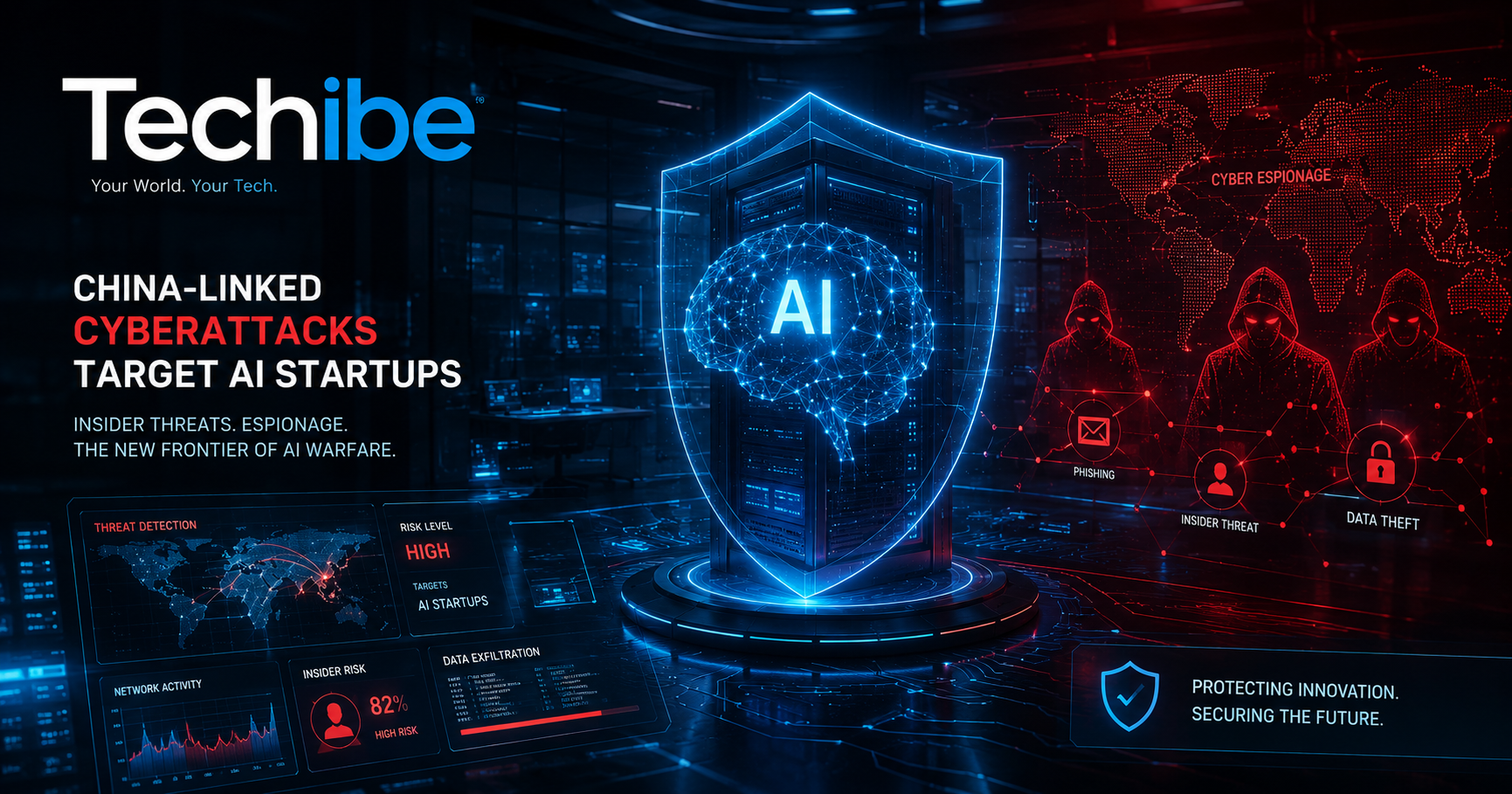
Some groups from China are changing how they hack into computers. They are not just trying to break in from the outside. Now they are also trying to get people who work at these companies to give them secrets. They are using tricks to get what they want and stealing information from companies that work with artificial intelligence.
This is a deal because now that artificial intelligence is such a big part of our lives keeping it safe is just as important, as making it better. Artificial intelligence needs to be protected so that bad guys cannot get their hands on it.
While large tech companies spend billions of dollars on cybersecurity, many AI startups operate with smaller security teams and limited resources, making them more attractive targets for attackers.
Why have AI startups become prime targets of attacks?
Artificial intelligence has become one of the most important strategic assets in the global economy and competition.
Companies working on developing advanced AI models have, in addition to software code, very valuable information at their disposal, including:
Proprietary data
Architecture of AI models
Model training methods
Optimization algorithms
Computational infrastructure
Secret research
Access to such information can offset years of research time and billions of dollars in investment for competitors or foreign governments.
Cybersecurity experts believe that AI startups have become one of the most valuable targets for tech espionage operations.
Today's cyberattacks are no longer limited to hacking systems.
Cyberattacks are not what they used to be. Nowadays cyberattacks are focused on people, not computers.
Cyberattacks are getting more about humans than before.
Security people think that cyberattacks are using these methods to get to information:
* Recruiting or deceiving internal employees
* Social engineering attacks
* Sending job offers
* Phishing emails
* Infiltration through partner companies
* Stealing user login information
Most of the time cyberattacks are not trying to break down the walls of security. Cyberattacks are trying to get to the people who already have access to company information.
This is why teaching employees and managing who has access to what's just as important, as having good security tools. Cyberattacks are a problem and employee training and access management can help stop cyberattacks.
Insider threats have become one of the biggest concerns for AI companies.
AI startups usually grow fast. They use researchers, programmers, contractors and business partners to make their products.
As more people get access to info security management gets harder.
Experts think insider threats, whether on purpose or not are a security risk for AI companies. These threats can come from people with access to information.
Many organizations are now spending more on managing user identities controlling access, monitoring employee activity and teaching cybersecurity.
They want to reduce the chance of data leaks and insider threats. This is because insider threats are a concern, for AI companies. They are investing in these areas to protect their information.
The race over artificial intelligence has taken cybersecurity to a new level.
As countries and big companies put money into Artificial Intelligence (AI) the value of the information linked to this tech has gone up fast.
AI models the data used to train them algorithms and even product development plans have become super important assets. They can give companies an edge over their competitors.Nowadays many cyberattacks aren't about stealing money or destroying systems. Instead they are about stealing information and getting access to technologies like AI.
They want to get their hands on things like AI models, training data and proprietary algorithms.
These things can be a game-changer, for companies.
How can AI startups protect themselves?
AI startups should make security a part of their business strategy from the very early stages of growth.
Some of the most important measures that can reduce the risk of attacks include:
Implement multi-factor authentication (MFA)Restrict employee access to sensitive information
Continuously train employees about social engineering attacks
Review the security of partner companies and suppliers
Monitor suspicious behavior of internal users
Encrypt sensitive information and AI models
Experts emphasize that in many recent attacks, it was not the technology's main weakness, but rather human error or excessive employee access that was the reason for the attackers' success.
Cybersecurity becomes a competitive advantage for AI startups
Previously, investors focused more on innovation and the speed of growth of startups.
But today, cybersecurity has also become an important criterion for evaluating companies active in the field of AI.
Investors and institutional customers expect AI companies to be able to protect their data, models, and intellectual property in addition to developing advanced technologies
.As a result, security is no longer just an additional cost; it has become part of the business value of AI startups.
conclusion
The increase in cyberattacks on AI startups that are linked to China shows that the global competition for AI is not just happening in labs and research centers.
It has also moved into the cybersecurity area.
As AI technologies get more valuable attackers change their ways. They now focus more on insider threats tricking people and stealing information.For AI startups success, in the future will not depend on making strong models. It will also depend on keeping their ideas safe and building a security system.
FAQs
1. Why are China-linked cyberattacks targeting AI startups?
AI startups possess valuable intellectual property, proprietary AI models, training data, and research that can provide significant technological and competitive advantages.
2. What are insider threats in cybersecurity?
Insider threats involve employees, contractors, or trusted partners who intentionally or unintentionally expose confidential information or provide attackers with access to sensitive systems.
3. Why are AI startups more vulnerable than large technology companies?
Many AI startups prioritize rapid innovation and product development, often operating with smaller cybersecurity teams and fewer security resources than established enterprises.
4. What attack methods are commonly used against AI companies?
Security experts report increasing use of phishing, social engineering, fake recruitment campaigns, credential theft, supply chain attacks, and insider recruitment rather than traditional malware alone.
5. How can AI startups improve cybersecurity?
Organizations should implement multi-factor authentication (MFA), strengthen identity and access management, train employees against phishing and social engineering, continuously monitor privileged accounts, and adopt a zero-trust security strategy.