TikTok Moves to Settle Addiction Lawsuit Ahead of Landmark Trial
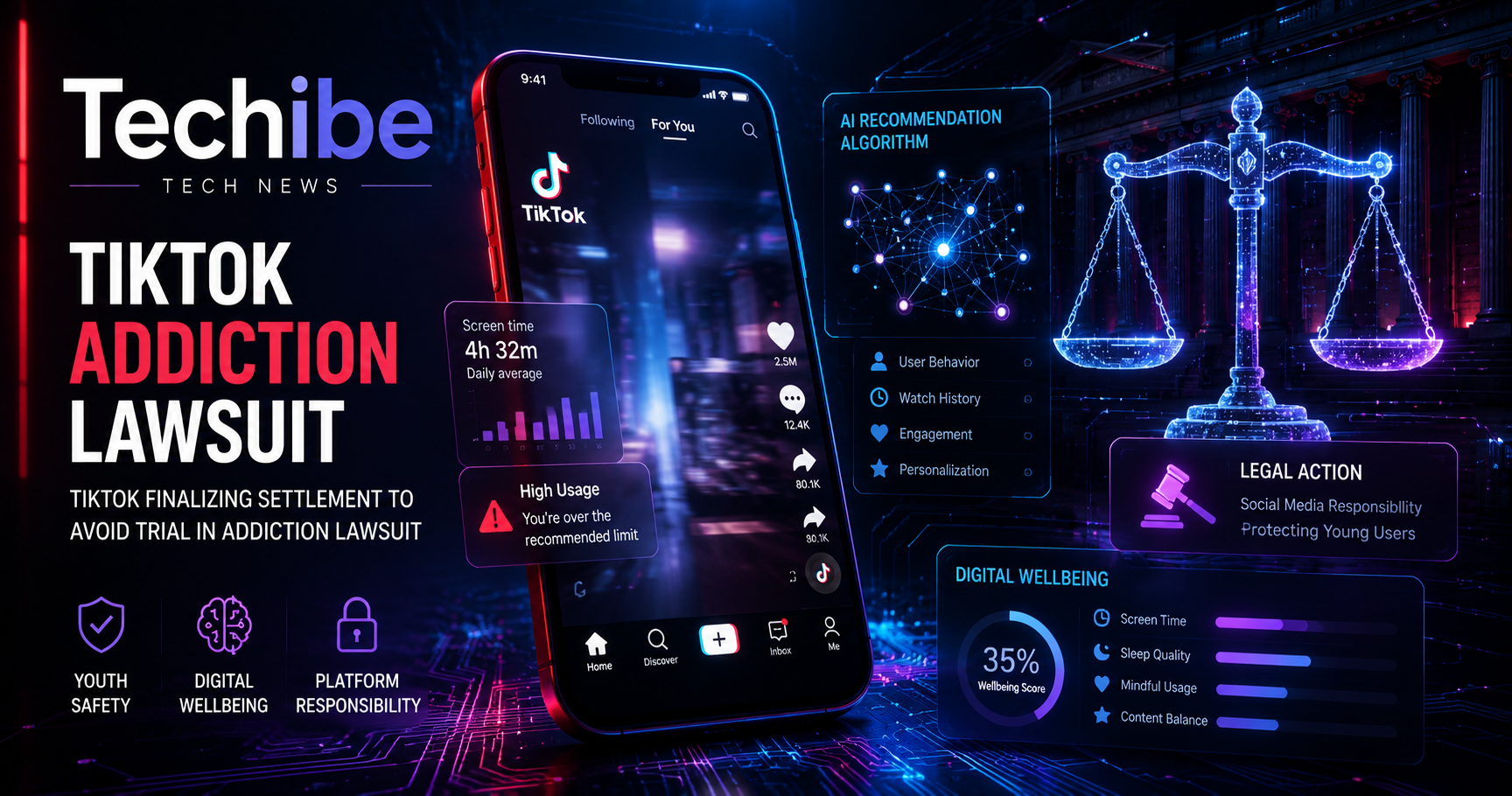
According to published reports, the company is finalizing a settlement with a Florida teenager who claims that TikTok’s content recommendation algorithm and addictive design led to excessive platform use, sleep disturbances, anxiety, and depression. If finalized, the agreement will resolve the case without a trial—a case widely regarded as a critical legal test for the social media industry.
Although details of the settlement have not yet been released, the case has drawn significant attention, as it is part of a growing wave of lawsuits challenging the accountability of tech companies regarding the psychological impact of their products, particularly on children and adolescents.
Why is this case important?
This complaint is not solely about this specific app; rather, it is an objection to social media networks and their detrimental impact on the mental health of adolescents.
Critics argue that many social media platforms keep users engaged for longer periods through content recommendation algorithms, infinite scrolling, auto-playing videos, and personalized systems—practices that can lead to significant psychological consequences, including depression, particularly among teenagers.
In contrast, technology companies emphasize that they have developed various features in recent years to manage screen time, enable parental controls, and enhance user safety, and that they continue to invest in digital well-being tools.
Pressure is mounting on social media companies.
The TikTok case is just one of dozens of similar lawsuits filed against major social media companies in recent years, and it won’t be the last.
In various countries, lawmakers, regulators, and families have expressed increasing concerns about the impact of these platforms on the mental health of adolescents.
Among the most important issues raised in these cases are the following:
Increased Time on Social Media
Teen Sleep Disorders
Anxiety and Depression
Content Recommendation Algorithms
Cyber Addiction
Online Safety for Children and Teens
As new laws are passed to protect underage users, pressure has also increased on tech companies to be more transparent about how their algorithms work.
Why did TikTok choose to reach an agreement?
Although none of the parties have commented on the details of the agreement, reaching a settlement before a trial begins is not unusual in complex technology-related cases.
Such agreements can reduce legal costs, prevent protracted proceedings, and avert the public disclosure of certain internal company documents and information.
For TikTok, resolving the case prior to trial also offers an opportunity to shift the focus away from legal disputes and toward the company's initiatives regarding safety tools, parental controls, and digital well-being.
However, legal experts believe that this agreement does not mean the end of TikTok's legal challenges, and similar cases against social networks are still pending in courts in the United States and other countries.
What impact will this case have on the future of the social media industry?
The TikTok case is not just about compensation or settling a legal dispute; it could also affect the future direction of social media regulation.
Over the years, governments and regulators in various countries have tried to pass stricter laws to protect children and teens online, but have failed. Issues such as age verification, limiting content recommendation algorithms, and increasing transparency and accountability for technology companies have become priorities for many lawmakers.
Although the potential TikTok settlement will end the case, legal pressure on other social media platforms is likely to continue.
Competition for user growth has created new challenges.
To boost this engagement, many platforms employ algorithms that continuously present personalized content to users. While this technology enhances the user experience, critics argue that, in some instances, it can encourage excessive social media use.
Consequently, technology companies now face a dual challenge: on one hand, they must retain users on their platforms, while on the other, they must address the expectations of regulators and concerns regarding mental health.
What message does this case have for technology companies?
Such cases show that technology companies are no longer judged solely on the number of users or their revenue.
Today, the way algorithms are designed, accountability towards underage users, transparency of platform operations, and compliance with digital safety standards have also become important factors in evaluating the performance of large companies.
For this reason, investment in digital health tools, parental controls, screen time management, and user safety is expected to increase in the coming years.
conclusion
TikTok’s potential agreement to end one of the most high-profile cases related to social media addiction is a sign of increasing legal and regulatory pressure on technology companies.
While the settlement may avert a contentious trial, the debate over the impact of social media algorithms on the mental health of users, especially teenagers, will continue.
As regulations become stricter in different countries, technology companies will be forced to balance business growth, user engagement and social responsibility, a shift that could shape the future of the social media industry for years to come.
FAQs
1. What is the TikTok addiction lawsuit about?
The lawsuit alleges that TikTok's recommendation algorithms and platform design contributed to addictive behavior, sleep disruption, anxiety, and depression in a teenage user.
2. Why is TikTok seeking a settlement?
According to reports, TikTok is finalizing a settlement before trial to resolve the dispute without lengthy courtroom proceedings or additional legal uncertainty.
3. Does this settlement mean TikTok admits wrongdoing?
No. Companies often settle lawsuits without admitting liability, and the reported agreement does not necessarily indicate that TikTok accepts the allegations.
4. Why is this case important for the technology industry?
The lawsuit is part of a broader legal and regulatory movement examining whether social media companies should be held accountable for the mental health effects of their platforms on young users.
5. Could this affect other social media companies?
Yes. The outcome may influence future lawsuits and regulations involving platforms such as Instagram, Snapchat, YouTube, and other social media services.