Anthropic Launches Claude Science to Transform Scientific Research
Artificial Intelligence is no longer just a tool for generating text or writing codeAnthropic has unveiled a new platform called Claude Science;
a tool developed specifically for researchers, research centers, biotechnology companies and the pharmaceutical industry. The platform is designed to help analyze scientific data, manage research processes and accelerate scientific discoveries and is part of Anthropic's new strategy to be more prominent in the life sciences and health fields.
The competition of AI companies has entered the next stage, moving from general tools to specialized methods
Why did Anthropic develop Claude Science?
For researchers, examining various parameters is time-consuming and tedious, sometimes taking months. To reduce this workload, this platform has been developed. It can process large volumes of information, organize data, and help identify important patterns with a lower probability of error.
The goal of this product is not to replace scientists; it is to help them spend more time on analysis, designing experiments, and developing new ideas.
What capabilities does Claude Science have?
Unlike chatbots, this program is designed for scientific research.
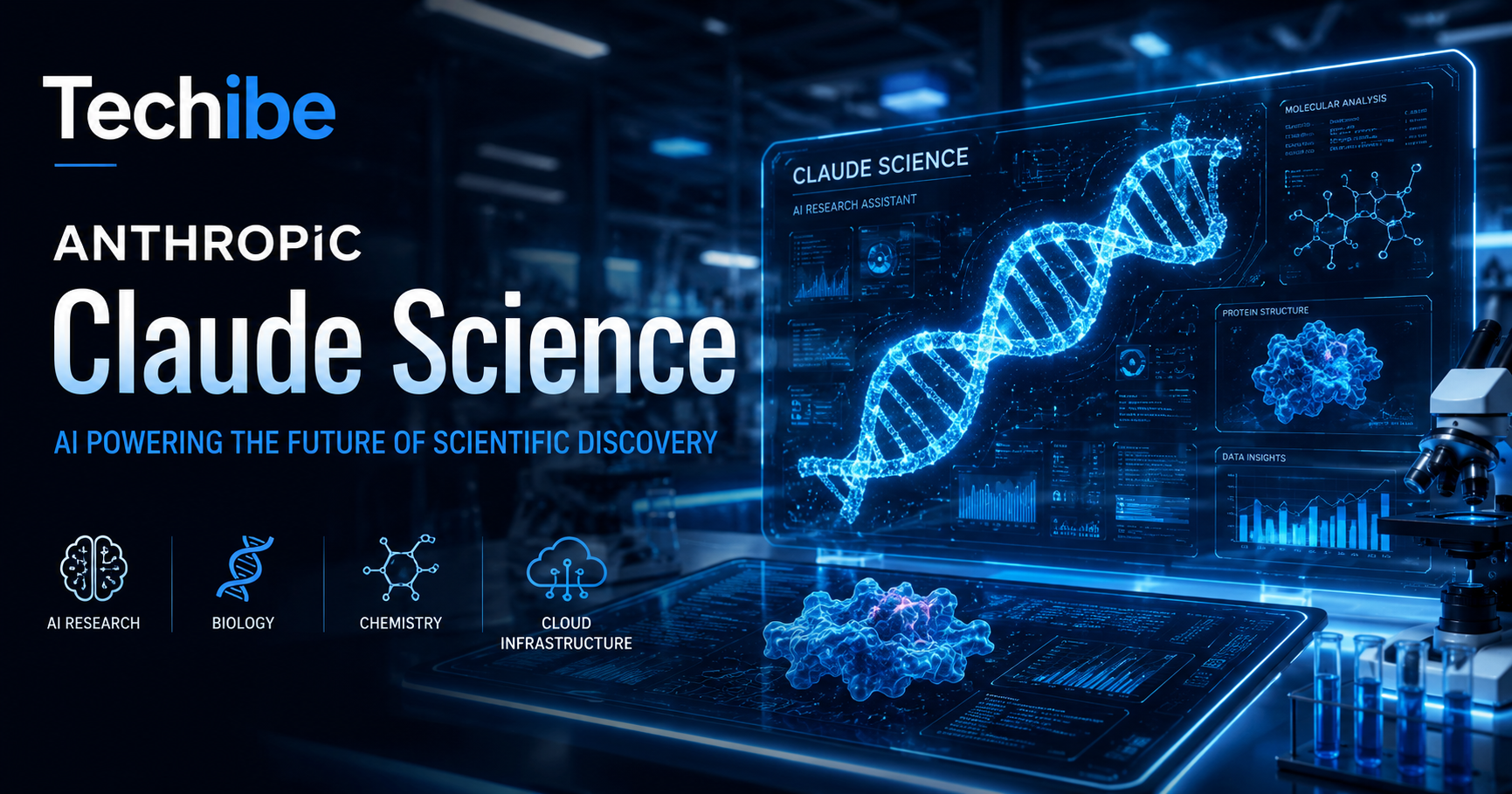
The platform can help researchers in areas such as:
Analysis of scientific articles and resources
Biological and molecular data review
Support for drug discovery
Analysis of protein structures
Management of complex computational workflows
Collaboration between research teams
By combining advanced language models and specialized capabilities, Anthropic hopes to make Claude Science a useful tool for universities, research labs, biotech companies, and the pharmaceutical industry.
Artificial intelligence is becoming a research collaborator
The introduction of this program demonstrates that the role of artificial intelligence is rapidly changing. In the past, AI was used more for content generation, text summarization or programming, but now the technology is entering specialized research processes;
from generating scientific hypotheses to analyzing data and planning complex experiments. For researchers who deal with millions of data points every day, such tools can significantly reduce the time it takes to get from raw data to usable results and speed up the process of innovation in fields such as medicine, pharmaceuticals, biotechnology and chemistry.
How is Claude Science different from current AI tools?
In recent years, various programs have been introduced for researchers, but most of them were public versions and were used to generate text. Anthropic has tried to change this approach with Claude Science.
The program is designed to fit into the workflow of real centers and research centers and analyze and process scientific articles.
From analyzing scientific articles and processing laboratory data to examining the structure of proteins and assisting in drug discovery projects. The goal is not to provide general answers, but to help researchers make faster and more accurate decisions in scientific projects.
The AI competition has entered the labs.
Claude Science’s launch shows that the competition among AI companies is no longer limited to chatbots or programming tools.
Now, AI is trying to play a role in many professions, from medicine and pharmacy to academic research, chemistry and biotechnology.
In recent months, companies such as Google Cloud have also introduced products specifically for scientific research, indicating that the “AI for science” market has become one of the most important areas of competition in the AI industry.
What impact will this product have on the future of scientific research?
If tools like Claude Science can meet researchers’ expectations, the process of conducting many scientific studies could move faster than ever before.
Reducing data analysis time, automatically reviewing thousands of scientific articles, identifying connections between complex data, and helping to design new hypotheses are just some of the capabilities that could increase the speed of innovation in fields such as medicine, pharmaceuticals, genetics, and life sciences.
Of course, Anthropic emphasizes that Claude Science is not intended to replace scientists; rather, its role is to help researchers perform time-consuming and repetitive tasks so that they can focus more on analysis, creativity, and decision-making.
conclusion
The introduction of Claude Science shows that the future of AI is shaping up to be beyond chatbots and general assistants.
By entering the scientific research space, Anthropic is trying to establish its position in one of the most valuable AI markets; a market that could transform the way scientific research is conducted, drug discovery and medical technology development in the coming years
.As technology companies increase their investment in specialized tools, competition in the AI industry is gradually moving from building generic models to developing specialized solutions for different industries; a path that could accelerate scientific innovation more than ever.
FAQs
1. What is Claude Science?
Claude Science is Anthropic's specialized AI platform designed to assist researchers with scientific analysis, literature review, biological research, and complex scientific workflows.
2. Who is Claude Science designed for?
The platform targets universities, research institutions, biotechnology companies, pharmaceutical organizations, and scientific laboratories.
3. How is Claude Science different from regular AI chatbots?
Unlike general-purpose AI assistants, Claude Science focuses on scientific research by helping users analyze complex datasets, review research papers, and support research workflows.
4. Can Claude Science replace scientists?
No. Anthropic positions Claude Science as an AI research assistant that helps automate repetitive analytical tasks while leaving scientific decision-making to researchers.
5. Why is AI becoming important in scientific research?
AI can process enormous volumes of scientific information much faster than humans, helping researchers accelerate discoveries, improve productivity, and reduce the time needed for data analysis.