Samsung and SK Hynix's Massive AI Chip Investment Signals a New Era for Global Semiconductor Innovation
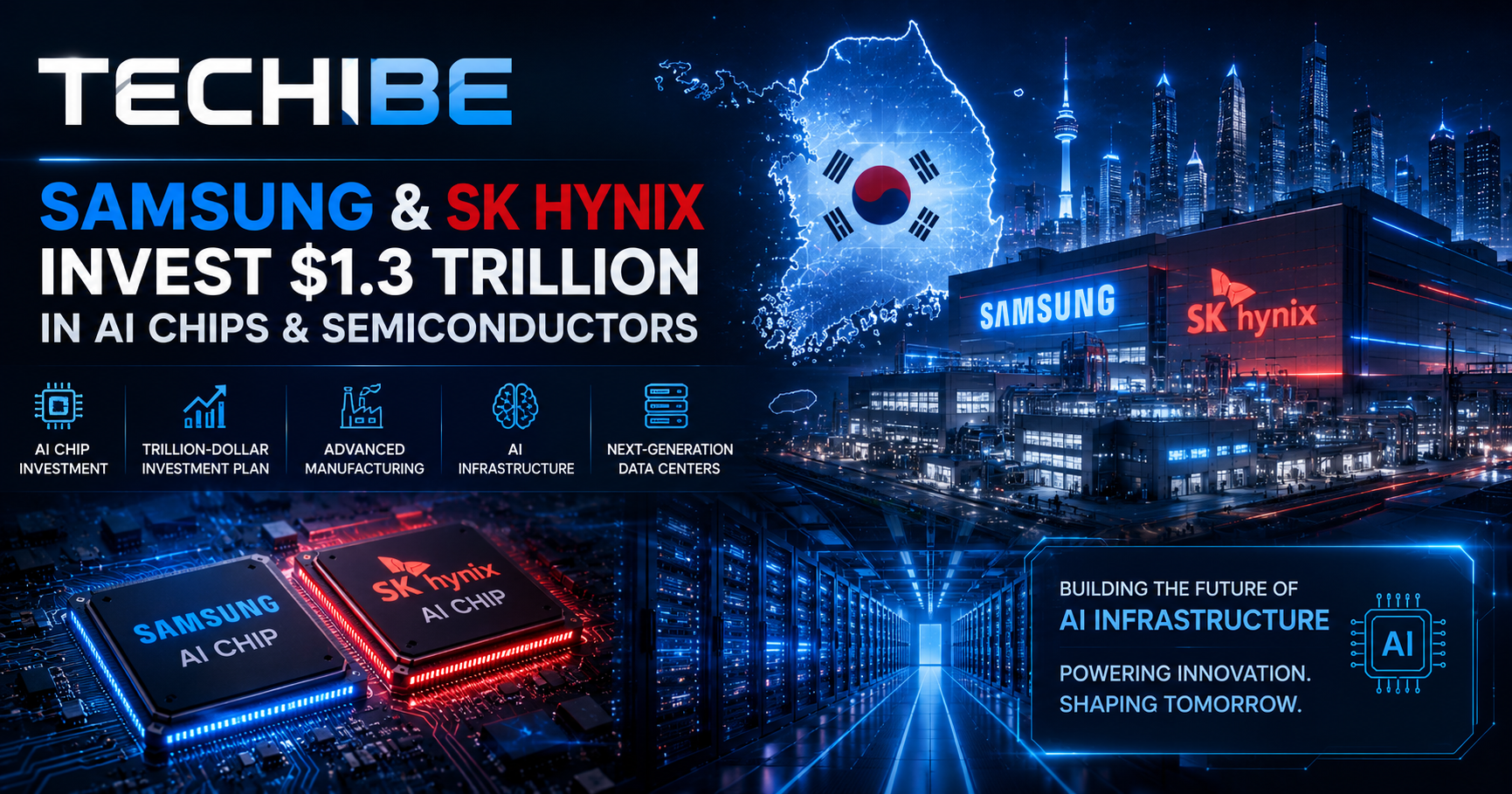
South Korea is preparing one of the most ambitious technology investment plans ever announced. According to multiple reports, Samsung Group and SK Group are planning long-term investments that could total 2 trillion won (approximately $1.3 trillion) over the next decade to strengthen the country’s leadership in artificial intelligence, semiconductor manufacturing and advanced digital infrastructure.
The proposed investment illustrates how the global AI competition has expanded far beyond software. As demand for AI computing power increases, governments and technology companies are investing unprecedented amounts in semiconductor manufacturing, large-scale data centers, next-generation memory, and AI infrastructure.
If implemented, the plan would represent one of the largest technology investment programs in history and solidify South Korea’s position as one of the world’s leading semiconductor hubs.
Why AI Chip Investment Is Becoming a Global Priority
Artificial intelligence relies on massive computing power.
Every major language model, enterprise AI platform, self-driving car, recommendation engine, and intelligent cloud service relies on advanced semiconductors capable of processing billions of calculations per second.
As the adoption of AI accelerates in healthcare, finance, manufacturing, robotics, cybersecurity, and cloud computing, the demand for specialized AI chips is growing at an unprecedented rate.
This rapid expansion has made semiconductor manufacturing one of the world’s most strategic industries.
Rather than viewing AI chips simply as hardware components, governments are increasingly recognizing them as critical national infrastructure that supports economic growth, technological competitiveness, and digital governance.
South Korea's Long-Term Technology Vision
South Korea has spent decades building one of the world’s strongest semiconductor ecosystems.
Companies like Samsung and SK Hynix currently dominate global memory chip markets, while continuing to invest heavily in advanced logic chips, packaging technologies, and artificial intelligence hardware.
The reported investment strategy will significantly expand these capabilities by funding new semiconductor manufacturing facilities, AI research, advanced manufacturing technologies, and next-generation infrastructure designed specifically for AI.
Government support is expected to play a key role by encouraging closer collaboration between technology companies, universities, research institutes and domestic suppliers.
The goal goes beyond increasing production capacity – it’s about creating a complete AI ecosystem that can compete with other global technology leaders.
How the Investment Could Reshape the Global AI Industry
The reported investment plan goes beyond expanding semiconductor manufacturing.
Artificial intelligence is creating unprecedented demand for advanced infrastructure, and countries are increasingly competing for leadership across the entire AI value chain—from chip design and manufacturing to cloud computing and enterprise AI deployment.
Samsung and SK Hynix are expected to strengthen various areas of the semiconductor ecosystem, including advanced memory technologies, AI accelerators, chip packaging, manufacturing equipment and next-generation manufacturing facilities.
If the investment goes ahead as planned, South Korea could further strengthen its position as one of the world's leading suppliers of AI hardware, while helping global technology companies meet the growing demand for high-performance computing.
The Growing Competition in AI Chips
The AI semiconductor industry has become one of the fastest growing markets in technology.
Companies including Nvidia, AMD, Broadcom, Qualcomm, Google, Amazon, Microsoft, and many emerging startups are investing billions of dollars in developing processors optimized for AI.
At the same time, governments across Asia, Europe, and North America are launching national semiconductor strategies aimed at boosting domestic production and reducing reliance on foreign supply chains.
South Korea’s proposed investment indicates that future competition will extend beyond chip performance. Nations are increasingly competing through production capacity, research capabilities, supply chain resilience, and long-term infrastructure investments.
Why Investors Are Watching Closely
Artificial intelligence continues to be one of the strongest investment themes in global financial markets.
Demand for AI processors continues to grow as companies deploy productive AI applications, large-scale cloud service providers expand data center capacity, and governments prioritize digital transformation initiatives.
Large investments in semiconductors are often seen as long-term indicators of industry confidence, rather than short-term market reactions.
For investors, reports of spending plans from Samsung and SK Hynix suggest that the big tech companies expect demand for AI infrastructure to remain strong over the next decade.
If successful, these investments could strengthen South Korea's competitive position while creating new opportunities in the areas of semiconductor manufacturing, enterprise artificial intelligence, cloud infrastructure, and advanced computing.
What This Means for Enterprise AI
The next decade of AI will be defined not only by smarter AI models, but also by the infrastructure that powers them.
As companies continue to integrate AI into their business operations, the demand for reliable semiconductor supply chains, advanced memory technologies, high-bandwidth networks, and energy-efficient computing will continue to grow.
Massive investments from companies like Samsung and SK Hynix show that AI infrastructure has become a long-term strategic priority rather than a short-term technology trend.
For businesses, stronger semiconductor manufacturing capacity can help improve access to AI chips, reduce supply constraints, accelerate enterprise AI deployment, and encourage greater innovation across the technology ecosystem.
At the same time, increased competition among semiconductor manufacturers is expected to drive improvements in performance, efficiency, and cost in future generations of AI hardware.
The Future of AI Chip Investment
The global AI race is entering a new phase where investment in infrastructure will determine long-term leadership.
Governments and tech companies are no longer just investing in software or foundational models—they are building entire ecosystems that include semiconductor manufacturing, advanced packaging, AI cloud infrastructure, renewable energy, research centers, and highly skilled engineering talent.
The trillion-dollar investment strategy announced by South Korea reflects this broader shift.
Rather than merely responding to current AI demand, the country is positioning itself to support decades of future growth by expanding the infrastructure required for next-generation computing.
Industry analysts expect similar massive investment plans to emerge in other leading technology markets as competition in AI infrastructure intensifies.
Conclusion
Samsung and SK Hynix’s $1.3 trillion investment plan in AI chips reflects the extraordinary scale of global investment in AI infrastructure.
As AI becomes increasingly central to economic growth, countries capable of producing advanced semiconductors will play a key role in shaping the future of enterprise computing, cloud services, and digital innovation.
While software remains the public face of AI, it is semiconductor manufacturing that provides the foundation for any AI advancement.
For businesses, investors and technology leaders, South Korea’s ambitious investment strategy is another clear sign that the future of AI will be built on robust infrastructure, advanced chip manufacturing and long-term innovation.
FAQs
1. Why are Samsung and SK Hynix investing so heavily in AI chips?
The companies aim to strengthen South Korea's leadership in semiconductor manufacturing and meet rapidly growing global demand for AI computing infrastructure.
2. How much is the reported investment worth?
Reports indicate the long-term investment plan could total approximately 2,000 trillion won (around $1.3 trillion) over the coming decade.
3. Why are AI chips so important?
AI chips provide the processing power needed for training and running advanced artificial intelligence models across cloud computing, enterprise software, robotics, and data centers.
4. How will this affect the semiconductor industry?
Large-scale investments are expected to increase manufacturing capacity, accelerate innovation, strengthen supply chains, and improve AI chip availability worldwide.
5. What does this mean for businesses?
Businesses could benefit from more reliable AI hardware, faster enterprise AI deployment, lower infrastructure constraints, and continued innovation in AI computing technologies.