OpenAI Unveils Jalapeño: Its First Custom AI Chip to Challenge Nvidia
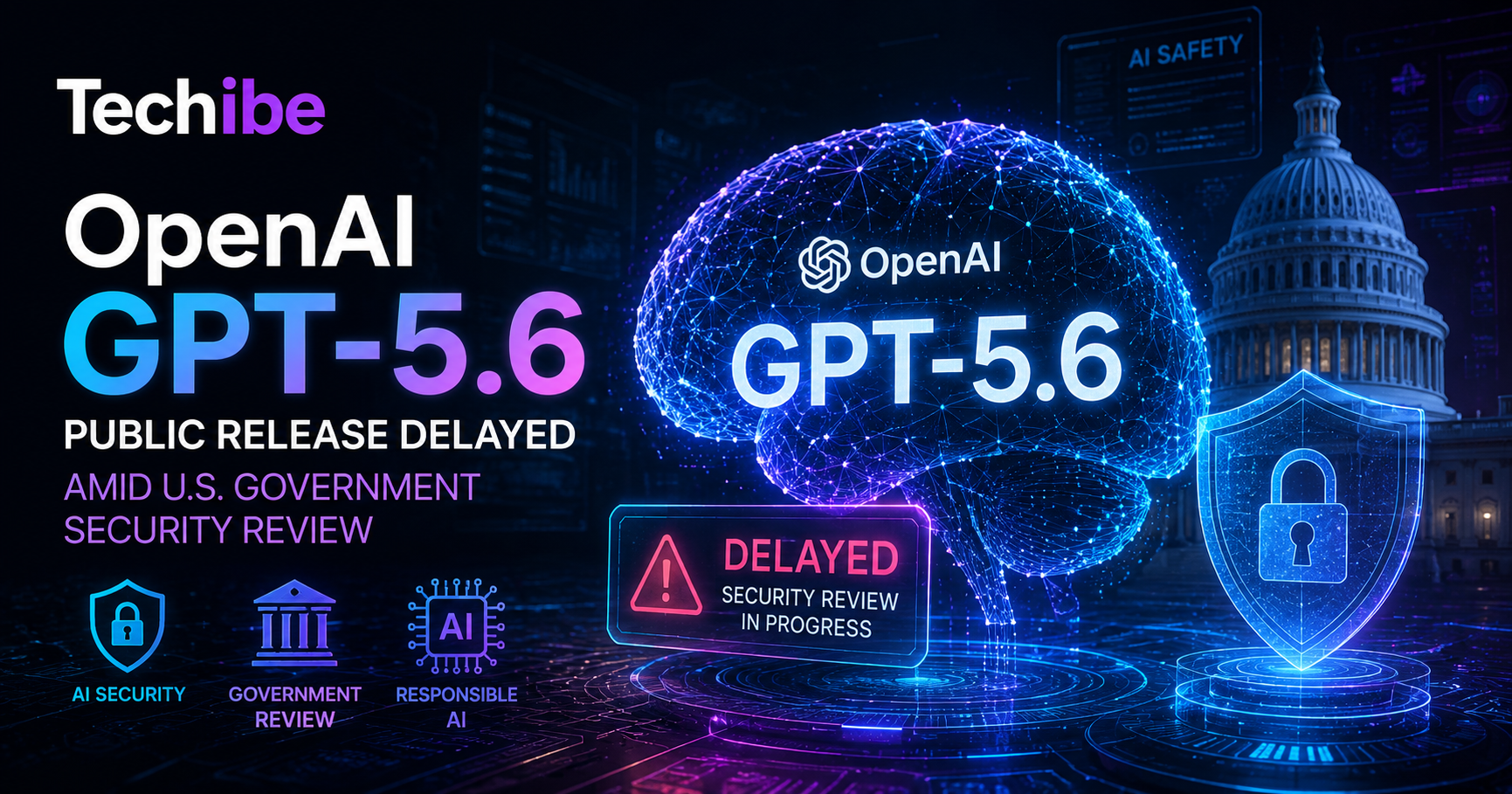
OpenAI Delays GPT-5.6 Public Release Amid U.S. Government Security Review
OpenAI has announced that it is temporarily postponing the public release of its new GPT-5.6 model. The decision comes after the US government requested further review of advanced AI models and assessment of potential national security risks. Under the plan only a limited group of approved partners will initially have access to the model, and its public release will be postponed until a later date.
The decision is one of the most important signs of a changing government approach to advanced AI. In years pas technology companies almost exclusively decided when to release new models, but now governments are looking to play a more active role in assessing and managing the risks of the technology.
Why was the release of GPT-5.6 delayed?
According to Reuters, the US government has asked OpenAI to give authorities sufficient time to review the capabilities and risks of GPT-5.6 before it is widely released.
The main concern of the authorities is the potential misuse of very powerful AI models in areas such as:
Cyber attacks
Malware production
Military applications
Widespread dissemination of disinformation
Threats to critical infrastructure
That is why OpenAI has agreed to limit the initial release to a small group of trusted partners.
How will GPT-5.6 be released?
Unlike previous releases, GPT-5.6 will not be made publicly available to all users at first.
OpenAI announced that the GPT-5.6 family includes three different models:
Sol; the most powerful model in the family
Terra; a balanced model for general applications
Luna; a faster and more economical
versionInitiall only certain organizations and approved partners will have access to these models, and a public release will begin after security assessments are completed.
Why is this news so important?
The delay in the release of GPT-5.6 is not just a change in release timing. it also shows that advanced AI models have now become strategically important technologies.
Governments believe that these models can bring many benefits, but also potential risks. For this reason monitoring processes and security assessments before public release have become even more important.
What is OpenAI's position?
OpenAI has said it supports safety testing and collaboration with government agencies but has stressed that these restrictions should not become a permanent practice.
The company says that if governments always determine who gets access to new models first, it could slow innovation and deprive developers, researchers and even cybersecurity professionals of access to important tools.
What impact will this decision have on the AI industry?
OpenAI’s decision could set a new standard in the AI industry.
Companies like Anthropic, Google, Meta, and xAI may also be forced to work more closely with regulators before releasing their powerful models.
This trend is likely to lead to the release of next-generation models undergoing more testing, security assessments, and risk assessments, which could both increase public trust and lengthen the time to market for new technologies.
What will be the future of developing artificial intelligence models?
The delay in the release of GPT-5.6 is not just a one-time decision for OpenAI, but could also signal a shift in the way AI model development and release will unfold in the years to come. As competition between companies like OpenAI Google Anthropi, Meta, and xAI intensifies developers now have to consider security and regulatory requirements in addition to technical innovation. This will likely make testing, risk assessment, and independent reviews a regular part of the AI model development cycle before public release.
On the other hand, businesses and organizations that use large language models are also seeking greater assurance about the security, stability, and reliability of this technology. As a result, companies that can balance innovation, transparency, and safety are likely to gain greater trust from customers, investors, and regulators. Many experts believe that the future of competition in the AI industry will not only depend on the power of the models, but also on how the technology is managed responsibly.
Conclusion
The delay in the public release of GPT-5.6 shows that the competition in AI is no longer just about developing more powerful models. how to manage monitor, and disseminate the technology has also become one of the industry’s most important challenges.
Although OpenAI sees the delay as temporary, it could herald an era in which collaboration between technology companies and governments becomes an integral part of developing advanced AI models.
OpenAI's Biggest Announcements in 2026
FAQs
1. Why did OpenAI delay GPT-5.6?
The company delayed the public rollout after a U.S. government request for additional security review.
2. Is GPT-5.6 cancelled?
No. OpenAI says the rollout is being phased, with early access limited to selected partners.
3. What concerns are being reviewed?
Officials are evaluating potential national security risks including cybersecurity and misuse of advanced AI systems.
4. Will everyone eventually get access?
OpenAI has indicated the restriction is temporary while safety assessments are completed.
5. Why is this news important?
It reflects the growing role of governments in overseeing frontier AI models before they are released publicly.