Two weeks ago, the Trump administration forced Anthropic to pull its most powerful AI models off the market. Today, Commerce Secretary Howard Lutnick wrote a letter that quietly changed the rules of the entire AI industry.
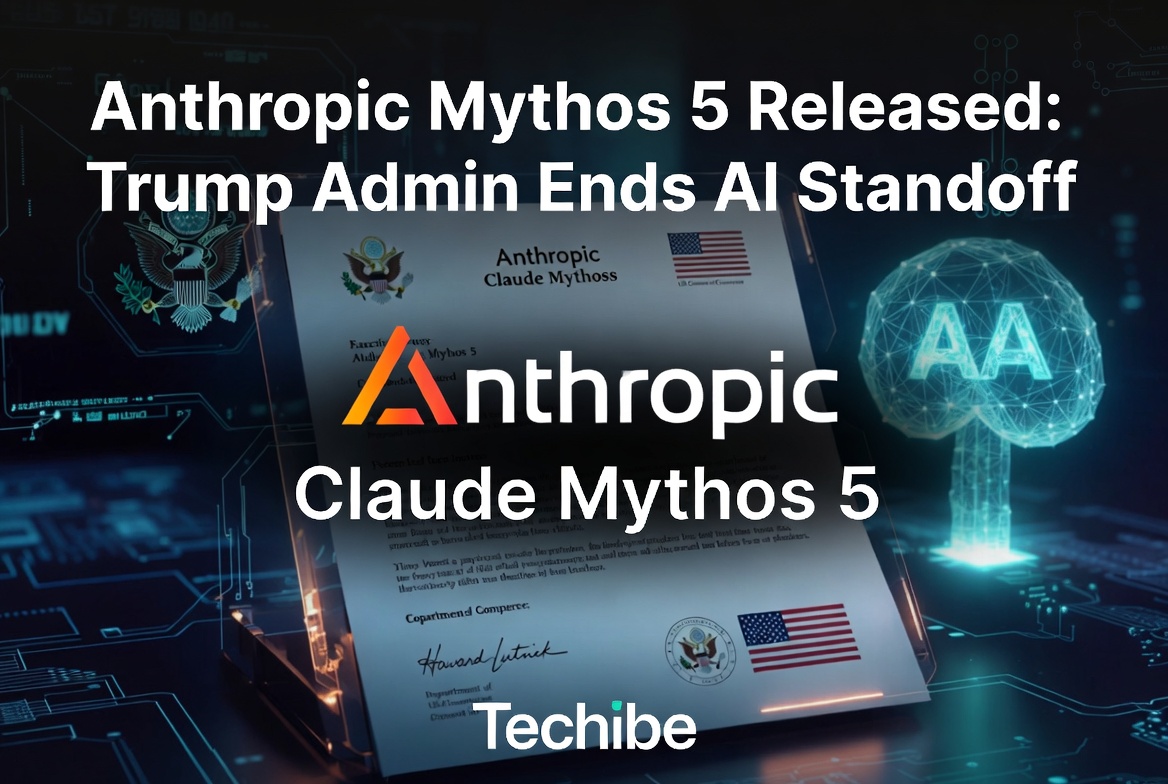
The U.S. Commerce Department permitted Anthropic on Friday, June 26, 2026, to release its Claude Mythos 5 model to approximately 100 selected companies and federal agencies. Commerce Secretary Howard Lutnick delivered the decision in a letter to Anthropic co-founder Tom Brown, ending a two-week standoff that began when the government forced Anthropic to pull both Mythos 5 and Fable 5 from the market. The decision marks the first time a US administration has formally approved the release of a frontier AI model, and it is almost certainly not the last.
Fable 5 remains blocked. That detail did not make most headlines. It should have.
What Happened The Two-Week Story Nobody Told Cleanly
On June 12, 2026, Anthropic publicly launched Fable 5, a version of its most powerful model with safety guardrails in place. Mythos 5 went to a smaller group of critical infrastructure defenders and cybersecurity organizations through Project Glasswing, Anthropic’s controlled-access program. Three days later, Amazon CEO Andy Jassy contacted the administration to flag a potential method of bypassing Fable 5’s guardrails, which security researchers call jailbreaking.
The government moved fast. Anthropic received a federal export control directive citing national security authorities, ordering the company to suspend all access to both models by any foreign national, including foreign national Anthropic employees. Not a warning. Not a request. A directive.
Anthropic pulled both models. The industry reacted with alarm. Brad Carson, president of Americans for Responsible Innovation, said it plainly:
When ad hoc executive actions replace clear standards, America risks surrendering its lead in AI and allowing genuinely dangerous technology to be deployed.
Anthropic pushed back internally, arguing that a narrow potential jailbreak was not sufficient grounds for pulling a model entirely. The company sued the Trump administration to reverse its earlier Pentagon supply chain risk designation litigation that is still ongoing.
Then, two weeks later, Howard Lutnick wrote Tom Brown a letter.
What the Letter Actually Says And What It Does Not
The letter is precise in what it grants. It is equally precise in what it withholds.
I have determined that appropriate safeguards are in place to permit certain trusted partners to access the Claude Mythos 5 Model,
That sentence grants access. It does not explain what the safeguards are. It does not define what makes a partner trusted. It does not say who selected the 100-plus organizations in Annex A, the attached list that specifies exactly which companies and agencies can now access Mythos 5.
A license will no longer be required to export, reexport, or in-country transfer, including deemed exports and reexports, the Claude Mythos 5 Model to entities identified in Annex A to this letter and their foreign national employees, or to Anthropic’s foreign national employees.
That last clause matters. Anthropic’s own non-American employees who were barred from accessing Mythos 5 under the original directive can now use the model again if they work for or with organizations on the list.
What the letter does not address: Fable 5. The slightly weaker but more widely available model remains blocked. People close to the talks told Semafor that movement on Fable is coming, but no timeline has been confirmed.
The Bigger Story: A New Regulatory Regime Is Being Born
Step back from the two-week standoff. Look at what it produced. Lutnick’s letter marks the beginning of a new regulatory regime that gives the US government control over the release of frontier AI models. That sentence, from Semafor’s reporting, is the one that will matter most in the months ahead.
The Anthropic situation was not resolved by law. It was resolved by a letter from a cabinet secretary to a co-founder. No court. No legislation. No public process. A letter, an attached list, and a decision made in private negotiations between a government and a company.
The precedent that is set is significant. The government now has a demonstrated mechanism for halting frontier AI model releases, and a demonstrated mechanism for selectively restoring them. Anthropic is the first company to experience both. It will not be the last.
Trump signed an order earlier this month laying out a voluntary testing process in which AI labs can provide the government with their models up to 30 days ahead of release to test for certain risks. Voluntary was the word used. The Anthropic case demonstrates what the word voluntary means in practice when the government disagrees with a company’s release decision.
Tom Brown: The Name You Should Know
Dario Amodei’s name is on most Anthropic coverage. This week, it was not Amodei who was doing the negotiating.
The letter was addressed to Anthropic co-founder Tom Brown, who has reportedly taken the lead in negotiations with the Trump administration, replacing Anthropic CEO Dario Amodei in that role.
That shift deserves more attention than it has received. Amodei is Anthropic’s public face, the CEO who has testified before Congress, attended G7 meetings, and defined the company’s public stance on AI safety. The fact that Brown, a quieter, more technically focused co-founder, is now the administration’s point of contact suggests both sides made a deliberate choice to lower the temperature.
Whether that reflects a genuine shift in Anthropic’s relationship with the administration, or simply tactical negotiation, is not yet clear.
The IPO Filing Nobody Planned to Talk About Today
On the same day the Mythos standoff began to resolve, a different piece of Anthropic news landed that got considerably less attention.
On Monday, Claude developer Anthropic said it confidentially filed with the Securities and Exchange Commission for an IPO, and rival OpenAI is also gearing up for a potential offering this year.
A company in active litigation with the Department of Defense, whose most powerful models were blocked by the government for two weeks, just filed for an IPO.
That sequence would be remarkable in any other industry. In AI in 2026, it describes a Thursday.
The IPO filing creates a new dimension to every future government negotiation with Anthropic. Public company status and the scrutiny, disclosure requirements, and shareholder accountability that come with it change the dynamics of how a company can respond to government pressure. Anthropic as a public company and Anthropic as a private startup are meaningfully different negotiating partners.
OpenAI Same Day: The Timing Is Not Neutral
The move comes the same day that Anthropic’s leading competitor, OpenAI, released its latest model, GPT-5.6, to a short list of government-approved partners.
That is not a coincidence worth dismissing. Two competing AI companies. Both are releasing powerful models to government-approved partner lists on the same Friday. Both navigating a framework in which the government has demonstrated it can halt model releases and selectively restore them. Both are aware that whoever is seen as the more cooperative partner has a structural advantage in future negotiations.
The competition between OpenAI and Anthropic has always been partly a competition for enterprise and government contracts. That competition now has a regulatory dimension neither company could have anticipated eighteen months ago.
What Anthropic Said
Anthropic posted a statement on X on Friday afternoon.
Since June 12, we’ve been working closely with the US government to restore access to Claude Mythos 5 and Fable 5. Today, the government notified us that Mythos 5, our strongest cybersecurity model, can be redeployed to a set of US organizations that operate and defend critical infrastructure. We’re restoring access for these organizations quickly, and we’re continuing to work with the government to expand access to Mythos 5 and make Fable 5 available for general use again.
That statement is carefully worded. The phrase “continuing to work with the government” signals that Fable 5’s path back is still a negotiation, not a resolution.
Anthropic did not respond to CNBC’s earlier request for comment on the original blocking. It has not addressed the question of what commitments it made to secure Mythos 5’s return.
TECHIBE BOTTOM LINE
The two-week Anthropic-Trump standoff ended the way most Washington standoffs end, not with a law, not with a court ruling, but with a letter and a list. Howard Lutnick’s note to Tom Brown resolved the immediate crisis. It also established something more durable: the US government now has a working template for controlling the release of frontier AI models. Anthropic is back in the market partially. The industry is on notice fully. And the question of what “voluntary” means when the government holds the power to pull your product has been definitively answered.
What We Still Do Not Know
These questions have not been answered, and they matter:
- What is in Annex A? The list of 100-plus approved organizations has not been made public. Who selected them and by what criteria is unknown.
- What did Anthropic commit to? The letter says Anthropic “committed to work with the U.S. government on protocols and standards and releases.” The specifics of that commitment have not been disclosed.
- When does Fable 5 come back? People close to the talks say movement is coming. No timeline exists.
- Does the DOD supply chain risk designation change? Lutnick’s letter is from the Commerce Department. The Pentagon’s designation of Anthropic as a supply chain risk remains in place. Litigation is ongoing.
- What happens to the next frontier model? GPT-5.6 to approved partners today. Mythos 5 to approved partners today. Is this the permanent structure of frontier AI release going forward?
Frequently Asked Questions
What is Anthropic’s Mythos 5 model?
Claude Mythos 5 is Anthropic’s most powerful AI model, developed with a focus on cybersecurity, specifically identifying weaknesses and security flaws in software. It was initially released in limited form through Project Glasswing, Anthropic’s controlled-access cybersecurity initiative, before being blocked by a US government export control directive on June 12, 2026.
Why did the Trump administration block Anthropic’s models?
The administration issued an export control directive citing national security authorities after Amazon CEO Andy Jassy flagged a potential jailbreaking method for Fable 5, a way to bypass the model’s safety guardrails. The directive required Anthropic to suspend all access by foreign nationals, including its own non-American employees.
Who is Tom Brown, and why is he negotiating with the government?
Tom Brown is a co-founder of Anthropic who has reportedly replaced CEO Dario Amodei as the company’s lead negotiator with the Trump administration. The Commerce Department’s letter restoring Mythos 5 access was addressed directly to Brown.
What is Project Glasswing?
Project Glasswing is Anthropic’s controlled-access cybersecurity initiative through which Mythos 5 is distributed to a limited group of organizations focused on defending critical infrastructure. The June 26 decision by Commerce Secretary Lutnick expanded access to approximately 100 companies and agencies under this framework.
Is Fable 5 still blocked?
Yes, Commerce Secretary Lutnick’s letter on June 26 addressed only Mythos 5. Fable 5, the more widely available version of the model, remains blocked. People close to the negotiations told Semafor that Fable 5’s release is being discussed, but no timeline has been confirmed.
What does the Pentagon’s supply chain risk designation mean for Anthropic?
The Department of Defense declared Anthropic a supply chain risk earlier in 2026, requiring defense contractors to certify they will not use Claude models in military work. That designation remains in place despite Commerce’s letter restoring Mythos 5 access. Anthropic is suing the Trump administration to reverse the designation in ongoing litigation.