For years, Apple’s entire privacy pitch was built on keeping your data away from Google. Then came WWDC 2026, where Apple quietly announced that Gemini is now one of the engines running Siri. That is not a small thing.
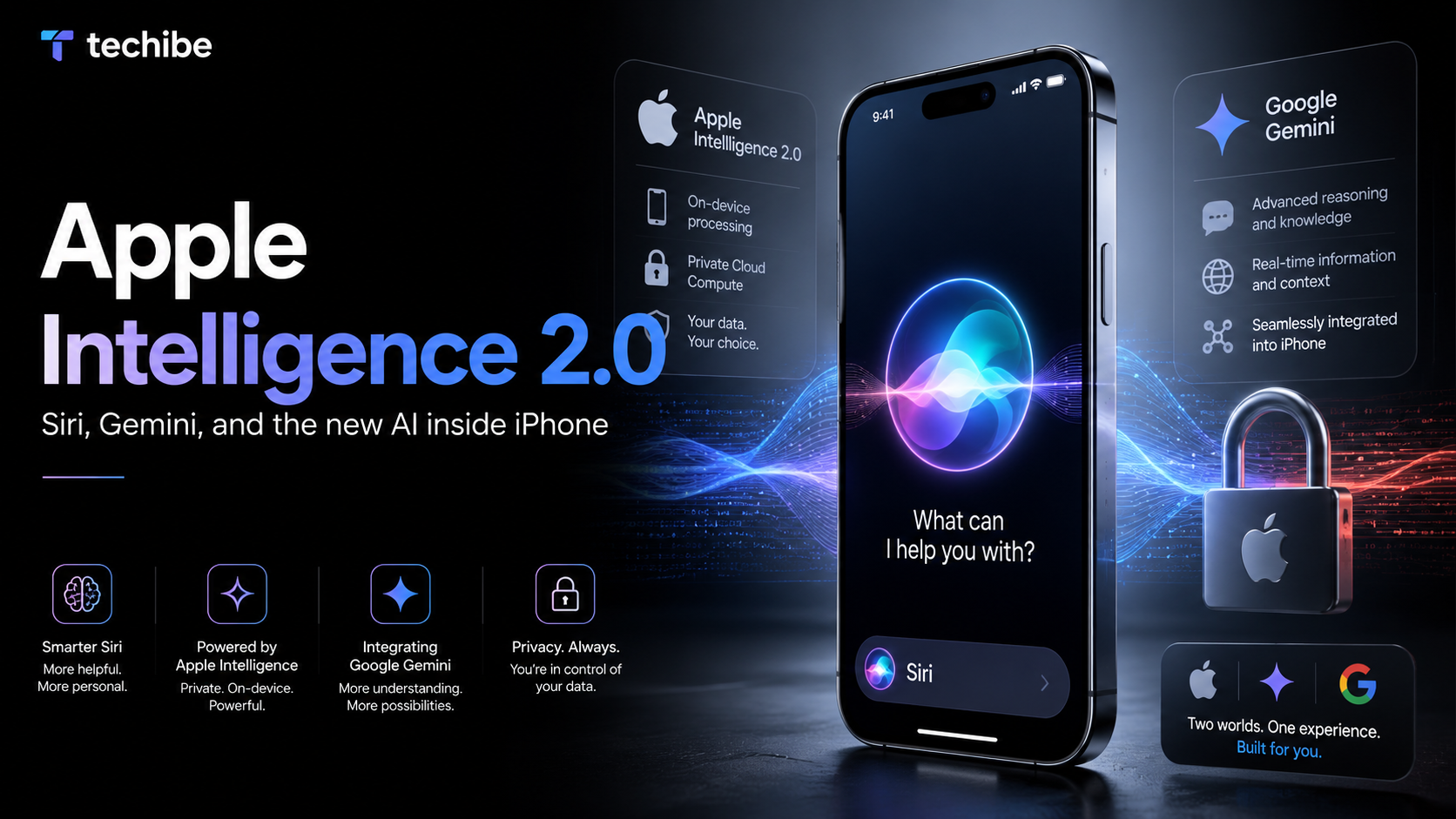
Apple unveiled the next generation of Apple Intelligence at WWDC 2026 on June 20, presenting a rebuilt Siri, AI woven into native apps, and a new integration with Google’s Gemini model. The update is being informally called Apple Intelligence 2.0, not Apple’s name, but an accurate shorthand for the scale of what changed. The goal, as Apple describes it, is to make AI feel like part of the iPhone rather than a separate destination you travel to.
The Contradiction Nobody Is Saying Out Loud
Apple’s privacy positioning for the past decade has been built, in significant part, on not being Google.
“What happens on your iPhone stays on your iPhone.”
The anti-tracking framework. The App Tracking Transparency campaign has cost Meta billions in revenue from private Relay. Hide My Email. A continuous, consistent message: your data is yours, and Apple does not hand it to the advertising companies that want it.
Then came WWDC 2026. Google, whose business model is built on the data Apple has spent a decade promising to keep away from them, is now one of the engines running Apple’s flagship AI feature. Apple is opening Siri to pick AI models, and Gemini is the obvious choice. Apple has not explained in detail what Gemini can see, what it can access, or what data flows to Google when Siri routes a query through its model.
This is not a minor footnote. It is the thing that makes Apple Intelligence 2.0 genuinely interesting and genuinely complicated.
What Siri AI Actually Is Now
Start with the feature that carries everything else.
Siri has baggage. Years of it. The joke writes itself: the assistant people used for timers, weather, and arguments with a glowing orb that heard every word except the important one. Apple is not pretending otherwise. The rebuilding of Siri is explicitly framed as a reset and an acknowledgment that the first version of Apple Intelligence, which launched in 2024, was never the full product.
The new Siri AI can understand personal context searching across your messages, emails, photos, and calendar. It can read what is on your screen and answer questions about it. It can take actions across apps rather than being confined to launching them. And it can surface specific details in real-time situations: finding an airline confirmation code in Mail while you are on hold with the airline.
That last example is the one Apple keeps returning to. It is not an accident. It describes the exact scenario where the current Siri would force you to put the call on hold, open Mail, search manually, find the code, switch back to the phone, and read it out. Apple is promising that Siri AI removes that friction.
Whether it actually does is something developer beta users are finding out right now. The track record of AI feature announcements translating cleanly into real-world performance is not perfect across any company.
Call Context: The Feature That Should Have Existed Years Ago
Call Context is the Siri AI feature Apple described most specifically at WWDC. During a business call, Siri can surface a confirmation number or reservation code from Mail without you interrupting the call to find it yourself. That sounds small. The people who have spent twenty minutes on hold while simultaneously searching three apps for a booking reference understand why it is not.
The feature requires that Siri can read your email. This requires that you trust Apple with access to your email. This is the same trust question that has always existed; it is just now extended to an AI system that may route some queries through a third-party model.
The privacy question and the convenience question are the same. Apple answers that privacy protections apply throughout. The specifics of what that means when Gemini is in the chain have not been fully published.
Writing Tools, Visual Search, and the Camera
AI writing help appears where you are already typing text fields, emails, notes, and messages, rather than requiring you to navigate to a dedicated tool. That is a meaningful design decision. It reduces the friction of AI assistance to near zero for the tasks where most people actually need it.
Visual search through the camera extends to more scenarios in this update. Point at something, ask about it. The integration between what the camera sees and what Siri can tell you about it has become tighter.
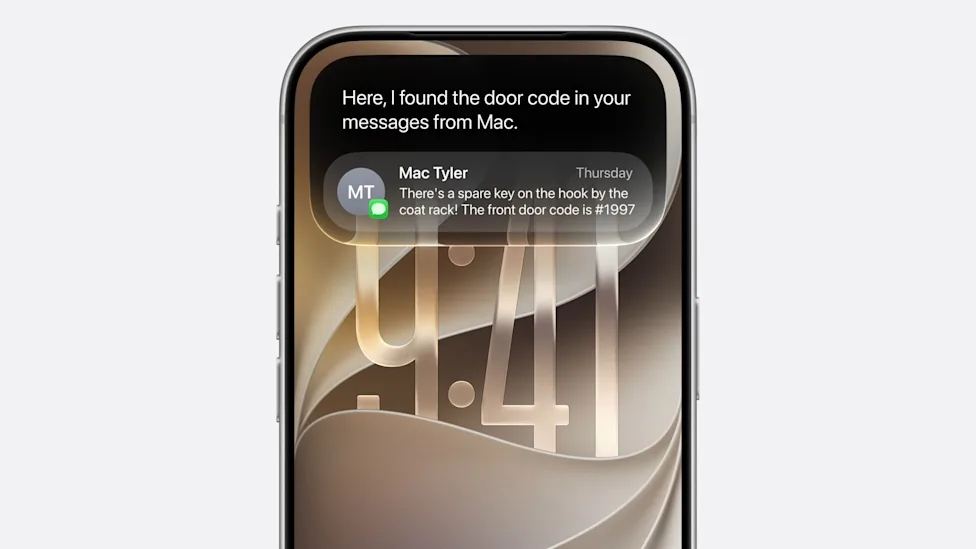
Photo tools continue to expand, with cleanup, editing suggestions, and organization. These were part of Apple Intelligence 1.0 and remain among the most used features in that original rollout.
Apple Intelligence should not ask users to become prompt engineers. That framing borrowed from Digital Trends’ coverage is exactly right. The design principle is that AI should make the phone feel like it understands the task better, not like it has added a new category of task on top of existing ones.
The Boring Plumbing That Decides Whether Any of This Works
None of the Siri AI features matter if apps do not expose what Siri needs to access them. App Intents is the developer framework that makes this possible. It allows app developers to connect their content and capabilities to Siri AI, enabling personal context understanding, app actions, and onscreen awareness. When an app supports App Intents properly, Siri can do things inside that app. When it does not, Siri can tell you the app exists and launch it for you.
Most users will never hear the words “App Intents.” But every time Siri fails to complete a task inside a third-party app, the reason will almost always be that the developer has not implemented App Intents deeply enough.
This is the least glamorous part of Apple Intelligence 2.0. It is probably the most important. A smarter model can answer better questions. An assistant that cannot interact with the apps people actually use is still performing a magic trick with a visible seam.
The developer ecosystem needs to move to make this work at the level Apple is describing. That process takes years, not months. Apple’s rollout timeline assumes developer adoption will follow. Whether it does and how quickly is the unresolved variable underneath every Siri AI demonstration.
Where Apple Intelligence 2.0 Does Not Work
Siri AI launches as a beta later this year, not on day one of iOS 27. The beta is restricted to devices set to English. It will not be available in the European Union on iOS, iPadOS, or watchOS at launch, while Apple works through regulatory requirements under the Digital Markets Act. It will not be available in China while Apple navigates regulatory requirements there.
That means the most significant AI feature in Apple’s biggest software release of 2026 will not be available in two of the three largest smartphone markets at launch, the EU and China, and will be English-only for a product used by hundreds of millions of people in languages other than English.
The unevenness of AI feature rollouts has been one of the defining frustrations of the Apple Intelligence era. Version 2.0 does not fully resolve that.
The Real Test: Small Moments, Not Big Demonstrations
Apple Intelligence 2.0 will succeed or fail on the same test as everything else Apple has shipped in the AI era: whether it handles small, ordinary tasks better than the user could handle them alone.
Finding a flight code during a call. Writing a follow-up email without the email reading like it was written by an enterprise software company. Editing a photo without opening a separate app. Answering a question about something on screen without making the user describe the literally visible context.
These are not dramatic use cases. They are the mundane friction points that accumulate across a day of phone use. Removing them quietly without drawing attention to the AI doing the work is harder than building a chatbot that produces impressive demonstrations.
Apple has been trying to thread that needle since 2024. The 2.0 update is a more complete attempt than the first version. Whether it finally lands depends on Siri, on App Intents adoption, on the Gemini integration performing without visible seams, and on whether Apple can expand beyond English-speaking markets before the competition closes the window.
After years of Siri being the assistant people use for timers and then ignore, Apple is making a genuine attempt to give it the job it has been pretending to have. Whether that is enough depends on the next twelve months, not the keynote.
Frequently Asked Questions
What is Apple Intelligence 2.0?
Apple Intelligence 2.0 is an informal term for the next generation of Apple Intelligence announced at WWDC 2026. It includes a rebuilt Siri AI with personal context understanding, Call Context for surfacing information during live calls, AI writing tools across native apps, visual search through the camera, and expanded photo editing tools. Apple officially calls it the “next generation of Apple Intelligence.”
What is Siri AI in iOS 27?
Siri AI is a rebuilt version of Siri that can understand personal context by searching across messages, emails, photos, and calendar entries. It can read what is on the device screen and answer questions about it, take actions across apps, and surface specific information like a flight confirmation code from Mail during a live phone call.
Is Google Gemini inside Apple Intelligence?
Yes. Apple made it clear in WWDC 2026 that the company will be opening Siri to integrate third-party AI models, including Google’s Gemini, as a major integration. This represents a significant shift within Apple’s AI strategy and raises some questions regarding data access and privacy that Apple hasn’t discussed publicly.
Why is Siri AI not available at launch in the EU and China?
Apple said Siri AI will not be available in the EU on iOS, iPadOS, or watchOS at launch due to regulatory requirements under the EU’s Digital Markets Act. It will also not be available in China while Apple works through separate regulatory requirements there. Siri AI launches as an English-only beta later this year.
What is Call Context in Apple Intelligence 2.0?
Call Context is a Siri AI feature that surfaces relevant personal information during a live phone call, for example, finding an airline confirmation code from Mail while you are speaking with the airline. It is designed to eliminate the need to put a call on hold and manually search for information.
What are App Intents and why does it matter?
App Intents is Apple’s developer framework that allows third-party apps to expose their content and capabilities to Siri AI. It is the technical foundation that determines whether Siri can take actions inside an app during Apple Intelligence features. Without App Intents integration, Siri’s ability to interact with third-party apps is limited to launching them.